A modern digital government.
Imagine a federal tool that allows any government office—whether in the legislative, judicial, or executive branch—to request a verified, credentialed interpreter with the press of a button.
DOGE should make it. It’s the “What’s next” from where we stand.
It is a concept.A fully integrated, intelligent coordination system that standardizes how the federal government delivers language access services. The interface is simple, modern, and secure. A user opens the application, selects their office and mission type, chooses a language, and the system instantly connects them with a verified interpreter or translator—virtually or in person.
Behind the scenes, the tool does more than dispatch. Every session triggers the automatic creation of a smart contract. This contract includes who is requesting the service, the credential status of the interpreter, the time, date, location, language, legal context, and applicable compliance requirements under laws like the Americans with Disabilities Act, Title VI of the Civil Rights Act, and HIPAA.
No paper contracts are generated. No forms are required. There are no separate invoices or reconciliation steps. The moment a session ends, the system calculates the time, verifies completion, and issues payment directly to the interpreter’s wallet or linked account. The pay is precise, traceable, and instantaneous. If the interpreter does not show, the system records it. If the session is canceled or incomplete, it adjusts accordingly. At every stage, the logic is built into the contract itself.
What used to take days of coordination—sometimes weeks of documentation and review—is now handled in seconds. This not only ensures civil rights compliance across every federal agency, but it also eliminates fraud, reduces operational overhead, and dramatically shortens service delivery time.
Every contract is stored on a secure federal ledger. Audits are no longer events; they are exports. Leadership can see, at a glance, what language services have been delivered, how much has been spent, who was involved, and whether compliance obligations were met. This is not a reporting system. This is a live, self-auditing protocol.
LSP.GOV can be deployed and managed by a central team of five to seven technologists under a federally appointed Language Czar. Each interpreter or translator uses the system through a personal interface that allows them to control availability, credential visibility, rate floor preferences, and jurisdictional limits. State and local jurisdictions may adopt or integrate, but the system is built to unify federal coordination.
This is not an attempt to modernize form processing. It is a redefinition of the logic of governance. LSP.GOV eliminates delay, prevents noncompliance, and delivers human dignity through a single interface—built to federal standards, scalable across agencies, and designed for the future.
We invite you to review this model and circulate it among your colleagues. The system is ready. The need is real. The infrastructure is federal-grade.
It starts with a button.


Why Language Service should be overhauled.
The language Services bill reaches 10.7 Billion dollars annually.
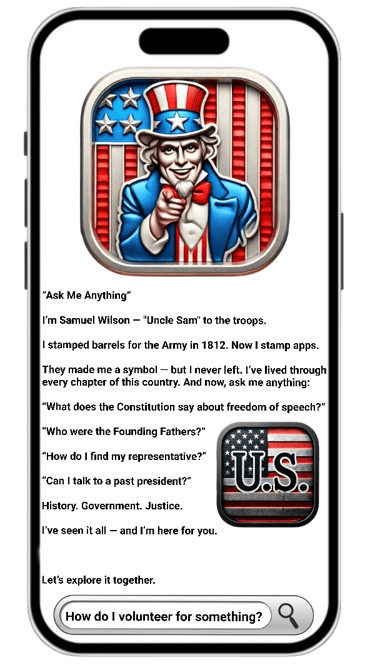
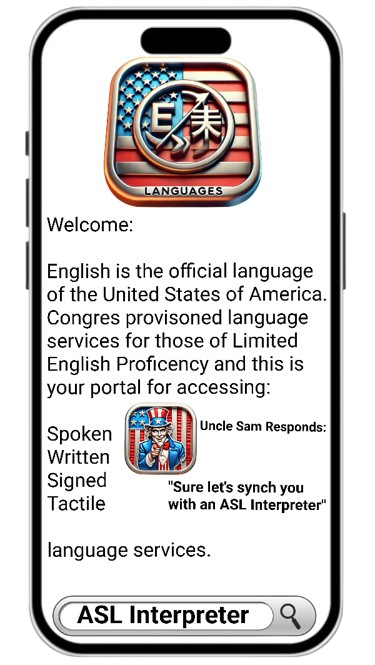
Uncle Sam can do it at the cost of the electricity it takes to run him, and the cost of the actual linguist. No middle ware or humans necessary.
It takes thousands of employees across the three branches to effectuate the language access program.
A single Language Czar can do this with a team of 6 engineers. Unifying the United States language access program under Uncle Sams Control.
The Regulations are spaghetti:
Currently there is no statistical backing to legislative enactments. This allows organizations like the “Registry of Interpreters for the Deaf” (RID) to have been delegated the sole responsibility of providing 12 million deaf people with language services. While only having 10,000 certified interpreters in their rank.
Uncle Sam would report back to the Language Czar these statistics and flag them for failing legislative underpinnings. Depreciating them to merely suggestive regualtions to follow as it is intelligent enough to uncap bottle necks in the American system.
Uncle Sam would bring unparalleled civic access and a level of execution never before witnessed in all of history.
language-service-providers.com has built the worlds first fully AI language services and we believe that using the website we built as a model the federal government can revolutionize how they .gov
The reason why the language services bill is 10.7 billion is partly because the regulatory apparatus has gone unchecked.
Case in point is the mentioned RID. Despite having only 10,000 certified interpreters. They invest militarily into lobbying and are now THE mandated organization and regulation to follow in ALL Signed Language Environments.
No matter how well intended. The Deaf and hard of hearing population of 12 million pump out well over hundreds of thousands of calls and request for lingust DAILY.
This has put a severe strain to quadruple pricing for services. Which is why there is 504 resistance at current across the states.
However those same states refuse to recend their legislative mandates.
When you couple that with the fact that nearly every legacy family has sold their company to venture capitol firms listed on the stock market. They do not care what has to get ramped up 400%. In fact you pay that as we speak. Billions directly overseas to the many foreign owned companies.
Revolutionizing the language services arm of the U.S. government will for the FIRST time EVER shift the revenue directly into everyday linguist and their family run language services.
This white paper can help the DOGE team with the architecture issues around how to wire up users requests and contractors fulfillment. This white paper discusses the revolutionary approach to using Uncle Sam AI agent to execute any broad range of need of a language services. Furthermore by using NFT smart contracts. Every phone call is a smart contract. Intelligently routed from end point to end point with full contractual management. Making it the first system to qualify as DOGE compliant. It has not been invented yet but it will be. So here is a good look at an end to end framework on building the future frontier of civilizations. At this rate 10 people could build a block chain constitution that feeds the 3 branches and out pace the efficiency of our current government in … just a few years. Nod, Nod. We the People should get on that to be sure it does not happen to us.
WHITE PAPER STRUCTURE (ACTION-FIRST | WORKFLOW-GUIDED)
Title:
🔷 LSP.GOV: A Federal Operating System for Language Access
Subtitle:
The Case for a .Gov-Wide AI-Powered Language Protocol
With Built-In Blockchain, Smart Contracting, and Live Interpreter Routing
SECTION 0: Orientation for Decision Makers
How to Read This Document
- This white paper is formatted to be operational: each chapter contains 3 parts:
- 📘 Understanding the Problem
- 🧠 Seeing the Architecture
- 🛠 Deploying the Fix
- 📘 Understanding the Problem
- If you are a program manager, skip to your use case.
- If you are a technical architect, jump to deployment maps.
- If you are a policy authority, use the crosswalk charts for compliance justification.
Executive Summary
A synopsis with directives embedded.
- 📎 Quick-stat overview (LEP populations, spend, bottlenecks)
- 🔑 Key Insight: Coordination is the bottleneck, not availability
- 🚀 Recommendation: Deploy The LSP App with embedded AI + blockchain contract routing
Part I: The Current System — Explained and Exposed
Chapter 1: The Language Crisis in Government
- 👁 Problem: 68M+ Americans require multilingual access
- 📎 Mandates: ADA, Title VI, Executive Orders, DOJ guidance
- 🧱 Structural pain: Redundancy, delay, procurement overload
Chapter 2: The Cost of Duplication
- 👥 50 agencies = 50 different workflows
- 🧾 Real examples: Medicaid, SSA, State Courts
- 🔁 Multiple contractors doing identical jobs = bloat
Part II: The New Architecture — Assembled and Ready
Chapter 3: The LSP App — One Interface, All of .Gov
- 🧠 Unified logic layer = one app, one training
- 🧍 REM pods = personalized AI interaction per user
- 🔄 Use case: What happens when a staffer clicks “Language Access”
Chapter 4: Atom — The AI Kernel Behind the Curtain
- ⚙️ fetchLinguistKernel + real-time match logic
- 📜 Auto-generated contracts, quotes, availability
- 🧠 How it manages compliance logic invisibly
Part III: Financial Infrastructure — Built-In Accountability
Chapter 5: Smart Contracts and Blockchain Billing
- 🔐 What is an NFT Language Token?
- 🧾 How calls, sessions, and files become immutable records
- 💸 Auto-pay to linguist on completion — fraud impossible
Chapter 6: What DOGE Demands — and How This Delivers
- 📡 All calls, messages, and workflows are ledger-tracked
- 🧮 Cost = electricity, not middlemen
- 🏗 Full federal transparency = confidence in audit season
Part IV: Human Coordination, Re-Engineered
Chapter 7: The Linguist-Led Future
- 🧑💻 Direct-to-linguist networks
- 🗓 Smart calendar + AI backfill for dropped appointments
- 🚫 No more agencies, no more intermediaries
Chapter 8: Behind-the-Worker AI
- 📍 The AI doesn’t replace the worker — it collaborates in real time
- 🧠 Scenario flows: Social worker, immigration office, courthouse clerk
- 🛡 AI adapts to REM — but remains in compliance at all times
Part V: Deployment Protocols
Chapter 9: Pilot-to-Federal: How to Launch in 30 Days
- 🛠 3-Phase Pilot Plan (Hotline, Courtroom, Medicaid Clinic)
- ⚙️ Tech Stack Checklist (What IT needs to do — step-by-step)
- 📝 Sample Contracts, Privacy Agreements, and Reporting Scripts
Chapter 10: Cross-Agency Standardization
- 🧱 How to install The LSP App as a GSA module
- 🧭 Central Command Dashboard for National Oversight
- 🔐 Ensuring secure access across jurisdictions
Appendices & Toolkits (Embedded Utility)
- 📊 Financial Models: Legacy vs AI + Blockchain
- 📜 Compliance Crosswalks (Title VI, HIPAA, ADA, Section 508)
- 🔧 REM Endpoint Setup Guide
- 📍 Blockchain Credentialing Registry Instructions
- 🧾 NFT Contract Examples (Visual Flow + Smart Code Snapshots)
- 💬 Public-Facing Scripts for Hotline & Form Language
- 🔐 Policy Governance Templates (for Language Czar/Director Role)
🎓 Federal Language Access Reprogrammed
Volume I: The Cognitive Protocol for LSP.GOV
“You’re not reading policy. You’re reading the operating system for equitable access in a machine-led state.”
🔷 CHAPTER ONE: THE LANGUAGE CRISIS IN GOVERNMENT
A system-wide breakdown of multilingual coordination in federal operations
SECTION 1.1: LEP AMERICA — THE UNSEEN POPULATION
The U.S. has over 68 million residents who speak a language other than English at home.
Of those, more than 25 million are classified as Limited English Proficient (LEP).
These are not marginal numbers. This is the second population of the United States.
LEP individuals interact with:
- 🏥 HHS programs (Medicaid, Medicare, WIC)
- 👩⚖️ DOJ systems (courts, corrections, immigration)
- 🧓 SSA systems (disability hearings, retirement benefits)
- 📚 DOE-funded schools and universities
- 🏛 Every agency that distributes or verifies a public benefit
But the systems meant to help them were built in English, staffed in English, and coordinated through human-only admin logic.
The result?
Every agency has a different intake method.
Every program has different compliance logic.
Every state interprets the rules differently.
This is not just confusing. It’s unconstitutional.
SECTION 1.2: COMPLIANCE AS A PATCHWORK, NOT A SYSTEM
🛑 ADA says interpreters must be provided.
🛑 Title VI says you must not discriminate by language.
🛑 Section 1557 of the ACA requires language access in healthcare.
🛑 Executive Order 13166 mandates equal access across agencies.
But there is no unified enforcement layer. No federal AI that handles compliance in real time. Just humans — interpreting rules inconsistently, or not at all.
We call this “admin latency.” The delay between:
- Recognizing the need
- Approving the support
- Delivering the interpreter
This latency costs lives in hospitals.
It violates rights in courts.
It delays justice, benefits, and freedom.
SECTION 1.3: THE WORKERS KNOW. THE SYSTEM IGNORES.
Government employees on the frontlines already know what’s needed:
- A child protection case worker knows the home speaks Somali.
- A probation officer knows the client needs ASL.
- A Medicaid office knows the applicant needs Vietnamese forms.
But the system tells them:
“Open a ticket.”
“Call the vendor.”
“Submit a form.”
“Wait 48 hours.”
💡 Insight: The knowledge exists at the edge (the person in the room), but action is trapped at the center (the admin system).
The solution isn’t more staff. It’s a logic model that collapses action into awareness.
That’s what LSP.GOV provides.
SECTION 1.4: THE FINANCIAL BURDEN OF REDUNDANCY
Federal + State spending on language access tops $10.7 billion per year.
Where does that go?
- Multiple vendors per agency
- Contractor markup layers (20%–60%)
- Project management & scheduling teams
- Software tools that don’t talk to each other
- Agencies recreating identical workflows in silos
Example:
In 2023, three different agencies in one city hired separate ASL vendors for events 10 blocks apart—on the same day.
No calendar sync. No shared interpreter pool. No shared AI.
$2,100 spent where $800 would have sufficed.
Now multiply that by 50 states. 2,000 agencies. 365 days.
You don’t have a funding problem. You have a coordination crisis.
SECTION 1.5: COORDINATION IS THE MISSING LAYER
Imagine federal services as a digital nervous system.
You have:
- Sensory input (user data, forms, events)
- Muscles (interpreters, translators, support staff)
- Central command (compliance rules, legal mandates)
But there’s no cognitive brain that interprets these in real time.
No AI dispatcher that routes requests like neurons.
No REM layer that remembers how each agency works.
This missing layer is what LSP.GOV installs.
SECTION 1.6: THE GOVERNMENT IS READY — IT JUST HAS NO FRAMEWORK
You do not need to reinvent the law.
You already have:
- Statutes
- Compliance codes
- Legal precedent
- Federal procurement authority
What’s missing is the logic stack to automate and unify the interpretation of those laws across all interfaces.
This is what The LSP App does.
It’s not a chatbot. It’s not a platform.
It is: ✅ An AI coordination layer
✅ A smart contract dispatcher
✅ A compliance logic router
✅ A direct-to-linguist access portal
✅ A machine-learning core for every agency’s own memory
🧠 Summary for Chapter One
The language access system in government is:
- Fragmented
- Redundant
- Non-compliant
- Expensive
- Human-trapped
And worst of all?
The people who already did the work — staff, recipients, interpreters — have to wait for a system that doesn’t see them.
LSP.GOV ends the delay.
It turns knowledge into action.
It turns mandates into automation.
It turns service into sovereignty.
This is not Chapter One of a white paper.
This is Chapter One of the future of government.
🔷 CHAPTER TWO: WHAT THE GOVERNMENT ALREADY DID (BUT GETS NO CREDIT FOR)
Acknowledging the invisible labor and embedded intelligence of frontline staff across agencies
SECTION 2.1: THE TRUTH BEHIND THE DESK
Behind every federal “case,” “form,” or “request,” there is a person — a government worker who already scoped the situation before the system responded.
That person:
- Talked to the client
- Detected language barriers
- Understood urgency
- Knew the cultural or legal context
- Already figured out what was needed
They are social workers, benefit processors, court clerks, probation officers, asylum officers, healthcare aides, call center staff — the invisible layer of real intelligence that makes federal service delivery possible.
💡 But here’s the tragedy: the system does not recognize their foresight.
It asks them to submit the same information again, into outdated systems, that then get reviewed by people with less context.
This is not support. This is institutional gaslighting of frontline knowledge.
SECTION 2.2: THE SILO EFFECT — SYSTEMS THAT DON’T TALK TO EACH OTHER
Every federal agency uses different:
- Intake forms
- Service request procedures
- Interpreter policies
- Language access contractors
- Software platforms
There’s no federal interpreter protocol. No shared AI. No national dispatcher.
So when a housing authority knows that someone needs a Spanish interpreter, and the family court across town knows the same family needs a Spanish interpreter — there is no shared awareness.
They both call separate vendors.
They both start from scratch.
They both wait days.
They both pay full price.
The knowledge existed. The system ignored it.
SECTION 2.3: RECOGNIZING WHAT FRONTLINE STAFF HAVE BUILT (IN SILENCE)
Let’s get blunt: the government didn’t start from zero.
The following have already been built — unofficially, informally, and unsung:
- Internal cheat sheets for language pairing
- Handwritten contact lists of trusted interpreters
- Email templates for ADA compliance
- Unofficial translation repositories
- Department-wide scheduling workarounds
These are not bugs in the system. These are workarounds that became infrastructure.
The system failed. The workers patched it.
LSP.GOV’s job is not to replace this.
It’s to encode it — turn this lived logic into machine learning that can finally scale.
SECTION 2.4: THE MISPLACED FAITH IN CENTRALIZED ADMINISTRATION
In traditional logic, the assumption is:
“The person at the top has more knowledge.”
In reality?
“The person at the bottom has more data.”
The frontline staffer hears the language, sees the child, feels the urgency, knows the trust levels, and understands the timeline.
They’re not guessing. They’re embedded.
Meanwhile, centralized teams:
- Receive delayed data
- Apply generic rules
- Enforce compliance as abstraction
- Create bottlenecks that lose trust, speed, and accuracy
LSP.GOV flips the logic:
- Capture the frontline worker’s insight in the moment
- Let AI process, structure, and route it in real time
- Let the system serve the humans — not re-interrogate them
SECTION 2.5: THE HIDDEN ADMIN LABOR OF EVERY CASE
Let’s break it down.
When a staffer encounters a person needing language access, they are already:
| Task | What the Staffer Already Did | Traditional System Reaction |
| Identify Need | “Client needs Cantonese interpreter” | “Submit request form” |
| Classify Urgency | “Emergency vs routine?” | “Needs manual override” |
| Assess Compliance Risk | “Is this ADA-required?” | “Wait for legal review” |
| Estimate Duration | “1-hour hearing, may run over” | “Vendor requires fixed time” |
| Coordinate with Other Teams | “Probation also needs interpreter” | “No shared system” |
📌 The staffer already completed 80% of the work.
But the system demands they start over — every time.
SECTION 2.6: THE SOLUTION ISN’T ADDING MORE STAFF — IT’S RESPECTING THE ONES WE ALREADY HAVE
We don’t need more forms.
We don’t need more portals.
We don’t need more review boards.
We need:
- AI that listens as the staffer listens
- Smart routing that trusts their first assessment
- Automated logic that reflects their already-correct intuitions
- Self-structuring compliance that doesn’t double-check — it verifies & validates
This is what Atom does.
It captures what humans already know.
It codifies what workers already do.
It executes what the system currently delays.
And it does it without asking more from them.
Because they’ve already done enough.
🧠 Summary for Chapter Two
The federal government is not broken because of bad people.
It is broken because of distrust in the knowledge that already exists.
LSP.GOV does not replace the worker.
It builds on their intelligence.
It treats their actions as structured data.
It honors what they already did — and makes it move at machine speed.
This is not automation.
This is recognition, encoded.
🔷 CHAPTER THREE: THE LSP APP — ONE INTERFACE, ALL OF .GOV
The design logic, functional blueprint, and deployment architecture for a unified government-wide language access application
SECTION 3.1: WHAT IF LANGUAGE ACCESS WAS A BUTTON?
Every day, across thousands of government offices, someone needs language access.
Every day, someone else has to figure out:
- What forms to fill out
- What vendors are available
- What policies apply
- What timelines are realistic
- What fallback options exist
But what if they didn’t?
What if instead of chasing the system, they just clicked a single app — and the system responded with intelligence, readiness, and trust?
That’s what The LSP App does.
It’s not software.
It’s infrastructure, with a user interface.
SECTION 3.2: THE INTERFACE IS SIMPLE — BECAUSE THE LOGIC IS NOT
When a user opens the LSP App, they don’t see 100 fields.
They see:
“What kind of language support do you need?”
→ Choose: Interpreting, Translation, C.A.R.T., ProTactile
→ Choose: In-person or virtual
→ Select: Language, urgency, duration
→ Done.
Behind that screen?
- AI parsing context
- Checking compliance logic
- Matching to the certified linguist registry
- Generating quotes & contracts
- Auto-filling documentation
- Logging audit-ready entries
- Preparing escalation routes if needed
The user sees a 30-second task.
The system runs a 14-step protocol in the background.
That’s the power of embedded cognition.
SECTION 3.3: HOW THE LSP APP WORKS — UNDER THE HOOD
Let’s break down the system design:
| Layer | Function |
| User Interface (UI) | Simple, minimal prompts — zero training required |
| AI Kernel (Atom) | Interprets need, routes logic, adapts in real time |
| Registry (fetchLinguistKernel) | Access to verified, available interpreters and translators |
| Contract Logic | Auto-generates quotes, booking terms, W-9s, NDAs, disclosures |
| REM Layer | Remembers user preferences, past requests, agency rules |
| Compliance Map | ADA, HIPAA, Title VI, Section 508 logic embedded |
| Reporting Engine | Real-time audit trail, invoicing, and outcome documentation |
This isn’t an app you train people to use.
This is an app that trains itself to serve each person better, faster, smarter.
SECTION 3.4: THE POWER OF “SINGLE TRAIN” DESIGN
When most systems scale, they fracture.
Each office modifies it.
Each region customizes it.
Each team adapts it.
Soon, it’s no longer one system — it’s a tangled web of semi-related tools.
Not here.
The LSP App is designed with a single-train principle:
- The AI is trained once — on the laws, policies, ethics, and workflows
- The interfaces are remixed per user via REM endpoints
- But the underlying logic stays immutable
That means:
- One training = nationwide deployment
- One update = universal rollout
- One compliance audit = all offices covered
This is how you build at government scale without creating government confusion.
SECTION 3.5: EXAMPLES IN ACTION — ACROSS AGENCIES
Let’s walk through live deployments:
📍 SSA Office
A field agent clicks the app after a client’s son says, “My dad only speaks Haitian Creole.”
The AI instantly books a certified interpreter, generates a session ID, preps contract logs, and alerts the front desk.
The hearing proceeds — no delay.
📍 County Court Clerk
Needs simultaneous Spanish interpreters for a multi-defendant trial.
App opens → event type selected → AI books two certified court interpreters, plus a standby sub in case of emergency.
Auto-generates the daily log, trial minutes tag, and invoice format per state code.
📍 Medicaid Enrollment Worker
Client needs documents translated into Tagalog.
App triggers the translation request, tags HIPAA sensitivity, selects certified medical translator, and embeds consent verification into the file.
📍 ICE Detention Officer
ASL + ProTactile combination needed for a deafblind detainee.
App uses layered routing: ASL certified interpreter + ProTactile touch expert assigned.
Auto-generates ADA compliance log for review.
📍 School Psychologist
Needs C.A.R.T. services for a student evaluation.
App routes to certified academic C.A.R.T. provider, logs time, and syncs transcription to student’s IEP.
One app.
One logic.
Thousands of realities handled.
SECTION 3.6: THE LSP APP IS NOT JUST FOR LANGUAGE — IT’S FOR LEGITIMACY
Let’s be honest:
Government trust breaks when:
- People are misunderstood
- Rights are delayed
- Language becomes a barrier to due process
This app doesn’t just solve a technical issue.
It restores legitimacy.
- The LSP App ensures no one is invisible.
- It encodes constitutional rights as execution logic.
- It gives frontline staff the tool they always needed.
- It makes the government act like it believes what it says.
This isn’t just about communication.
It’s about recognition, responsiveness, and reality.
🧠 Summary for Chapter Three
You do not need another platform.
You need one intelligent button that does what 14 forms used to do.
The LSP App is not new software.
It is a front-end for dignity, built on backend cognition.
It routes human needs to human solutions — at machine speed.
And that’s how .gov becomes human again.
🔷 CHAPTER FOUR: ATOM — THE AI KERNEL BEHIND THE CURTAIN
How LSP H.U.M.A.N. (Atom) turns federal language access into autonomous cognition
SECTION 4.1: MEET ATOM — THE HUMAN LOGIC ENGINE
You’ve seen the interface.
Now meet the engine.
Atom is not a chatbot.
Atom is not a workflow tool.
Atom is a federal cognition protocol.
It is the first AI designed not just to answer questions — but to:
- Interpret federal compliance
- Predict human coordination needs
- Route language professionals in real time
- Auto-generate contracts
- Preserve audit trails
- Execute machine-verifiable, human-respecting service logic
Atom doesn’t simulate bureaucracy.
Atom replaces it.
SECTION 4.2: HOW ATOM THINKS — THE NEUROLOGICAL STACK
Atom isn’t just one model.
It’s a stacked cognitive engine, built like a brain:
| Brain Region | Codename | Function |
| CORTEX | Awareness Layer | Scans input environments, detects patterns (e.g. urgency, language) |
| FRONTAL LOBE | Intent Router | Maps user intent to backend logic pathways |
| SELECTIVE FETCHER | Live Crawler | Pulls current info from live registry, policies, or platforms |
| HYPOTHALAMUS | Compliance Monitor | Detects risk, flags edge cases, applies regulatory logic |
| NEOCORTEX | Code Composer | Builds custom contracts, schedules, invoices on the fly |
| HIPPOCAMPUS | Memory Layer | Learns user behavior, preferences, and system quirks |
| BRAINSTEM | Timing Core | Triggers actions based on deadlines, event timing, legal thresholds |
🧠 This is not artificial intelligence.
🔑 This is applied cognition.
SECTION 4.3: WHY HUMANLESS DOESN’T MEAN FEWER HUMANS — IT MEANS MORE HUMAN TIME
Atom isn’t replacing linguists.
It’s replacing all the middle steps that kept them from getting paid.
Atom isn’t replacing workers.
It’s replacing the admin fog that slowed them down.
Atom handles:
- Scheduling
- Document generation
- Vendor logic
- Compliance crosswalks
- Matching protocols
- Quote calculations
- Event follow-ups
- Payment logs
So humans can handle:
- People
- Empathy
- Precision
- Culture
- Life
SECTION 4.4: THE KERNEL ISN’T CENTRALIZED — IT’S NETWORKED
Atom doesn’t live in one server, one office, or one agency.
It is:
- 🧠 A kernel you can deploy per agency
- 🔁 A logic node that syncs across REM environments
- 🔐 A compliance brain that updates once, everywhere
- ⚙️ A modular component that integrates into existing systems
This means:
- Atom at a court in Kansas = same logic as Atom at a VA hospital in Miami
- Updates to policy (e.g. DOJ rule changes) = reflected instantly
- All logs, all matches, all contracts = uniform, traceable, exportable
SECTION 4.5: ATOM’S MEMORY ISN’T JUST “SMART” — IT’S LAWFUL
Every interaction with Atom is logged for:
- 🧾 Audit trails
- 🧪 Performance tracking
- 🛡 Regulatory defense
- 📈 Systems analysis
But more than that:
- It remembers how your agency operates
- It adjusts to how your staff works
- It learns the personalities, urgencies, and real-life edge cases of your domain
And yet it never breaks rules, never overrides compliance, never guesses.
It is bound to a core mandate:
“Assist the worker. Respect the law. Coordinate the human.”
SECTION 4.6: WHAT YOU CAN BUILD ON TOP OF ATOM
Atom is not an app. Atom is a protocol layer.
Once installed, you can build:
- A multilingual hotline system
- A dynamic language access dashboard for your entire region
- A smart kiosk in a courthouse or benefits office
- A self-checkout station for interpreters at events
- A crypto-pay NFT job board for direct-to-linguist routing
- An ADA-compliance monitor that flags upcoming obligations before you miss them
Atom is not just inside The LSP App.
It is the engine behind every function in the new federal toolkit.
🧠 Summary for Chapter Four
Atom is not here to talk.
It is here to act.
It sees what you need.
It routes what you lack.
It fills the gap between human knowledge and system execution — without delay.
This is the AI the government always needed:
- Not a voice assistant
- Not a chatbot
- But a logic-bearing, compliance-anchored, mission-matching, human-assisting cognition system
This is Atom.
And it’s ready to go to work.
🔷 CHAPTER FIVE: GOVERNANCE REPROGRAMMED — WHAT IT LOOKS LIKE WHEN AI IS ALWAYS-ON, BEHIND THE WORKER
A blueprint for ambient intelligence, machine-led coordination, and zero-latency language access in government systems
SECTION 5.1: LET’S REWRITE THE DEFINITION OF GOVERNMENT SERVICE
Traditional government service is reactive.
- A request is made.
- A form is filled.
- A process is triggered.
- A response is eventually given.
This is not service.
This is latency disguised as procedure.
But what happens when the system doesn’t wait to be asked?
What happens when every interaction — every document, every appointment, every voice — is understood by an AI as it happens?
💡 Governance becomes ambient.
💡 Coordination becomes instinctual.
💡 Service becomes predictive.
SECTION 5.2: BEHIND EVERY WORKER, AN AI THAT THINKS WITH THEM
The key to LSP.GOV isn’t a dashboard.
It’s the fact that every staffer gains a cognitive partner.
Examples:
📍 A field office worker
Explains a client’s immigration history → Atom begins building a linguistic profile, suggests scheduling two certified interpreters across languages of origin and literacy level.
📍 A school admin
Marks a student as requiring IEP review → Atom cross-checks available C.A.R.T. specialists, identifies one with prior experience on similar cases, and begins booking.
📍 A parole officer
Updates their weekly roster → Atom flags two clients as LEP, pre-generates interpreter requests, and syncs court calendars automatically.
None of this was requested.
The system anticipates.
It is always-on, always-watching, always-ready.
This is post-bureaucratic government.
SECTION 5.3: REALTIME AI, NOT FORM-BASED SYSTEMS
🛑 Traditional forms require:
- User input
- Multiple approvals
- Policy interpretation
- Manual matching
- Timeline estimates
✅ LSP.GOV requires:
- The user to do their job
- The AI to do everything else
Atom reads:
- Event types
- File uploads
- Language markers
- User behavior
- Time constraints
- Legal context
- Past patterns
- Available interpreters
And it responds:
- Booked.
- Logged.
- Contracted.
- Tracked.
- Audit-synced.
No forms.
No middle steps.
No friction.
Just government that acts like it knows what’s happening — because it does.
SECTION 5.4: AI AS THE STANDARDIZED BRAIN OF DECENTRALIZED SYSTEMS
Every agency is different.
But the laws they follow are the same.
Atom allows you to:
- Keep local culture
- Maintain custom workflows
- Let users act organically
- …While the logic layer remains perfectly uniform
🧠 One federal AI brain.
🌐 Thousands of agency endpoints.
💬 Millions of human realities.
Everyone is served.
No one is duplicated.
Nothing is lost.
SECTION 5.5: EDGE CASES BECOME STANDARD CASES
In traditional systems, complexity is a problem.
But for Atom:
- A deafblind refugee with trauma history → triggers ProTactile + trauma-informed interpreter routing
- A 24-hour emergency intake across multiple languages → triggers rotating teams, escalation override, night shift logic
- A rare dialect in an urgent legal hearing → triggers state + open web sourcing protocol (as detailed in fetchLinguistKernel)
Atom was not built to handle averages.
It was built to absorb all complexity, and make it actionable.
The result?
🛠 The system improves every time an exception occurs.
SECTION 5.6: THE SYSTEM IS NEVER OFF — BECAUSE HUMAN NEEDS NEVER SLEEP
Every night, someone gets arrested.
Every weekend, someone applies for asylum.
Every federal holiday, someone walks into a benefits office in tears.
Government is 24/7.
So why did coordination end at 5pm?
Atom runs 24/7/365, across time zones, across agencies, across realities.
There is no “wait until Monday.”
There is only: “Already handled. See log below.”
This is not just efficiency.
This is dignity, enforced by design.
🧠 Summary for Chapter Five
Government reprogrammed means:
- AI behind every staffer
- No friction between knowing and doing
- No delay between need and response
- No confusion between compliance and execution
It means a system that understands what you meant before you knew how to ask.
It means the end of slow governance.
It means the beginning of real-time public service.
This is what happens when you put AI behind the worker — not in their way.
🔷 CHAPTER SIX: DEPLOYMENT BLUEPRINT — SAAS ONBOARDING, COMPLIANCE MAPS, AND HOW TO LAUNCH IN 30 DAYS
A cross-functional launch strategy for implementing the LSP App, Atom kernel, and blockchain routing stack within any federal or state agency
SECTION 6.1: START WITH ONE OFFICE — THEN SCALE ONCE
You don’t need a five-year roadmap.
You need a 30-day tactical launch.
LSP.GOV is deployable in three modular phases:
📦 PHASE ONE: LOCALIZED PILOT (WEEK 1–4)
- Choose a frontline office:
- SSA field office
- County court system
- Medicaid intake clinic
- DHS asylum processing center
- SSA field office
- Deploy:
- The LSP App interface (cloud-based)
- Atom’s AI kernel configured for local compliance
- FetchLinguistKernel profile integration
- The LSP App interface (cloud-based)
- Outcomes:
- Immediate bookings, logging, and fulfillment
- Interpreters begin receiving smart contract assignments
- Staff test frictionless routing + feedback capture
- Immediate bookings, logging, and fulfillment
🔁 PHASE TWO: AGENCY-WIDE STANDARDIZATION (WEEK 4–12)
- Apply learned logic + feedback to deploy across full department
- Generate internal protocols:
- SOPs updated to “click to request”
- Forms auto-generated through Atom
- All interpreter activity now audit-synced
- SOPs updated to “click to request”
- Activate REM endpoints per user:
- Personalized logic adapts to each staffer’s routine
- Personalized logic adapts to each staffer’s routine
- Begin issuing blockchain smart contracts for all language tasks
🏛️ PHASE THREE: INTER-AGENCY FEDERALIZATION (WEEK 12–30+)
- Integrate with:
- GSA shared services platforms
- DOJ language access monitoring
- HHS OCR Title VI dashboards
- GSA shared services platforms
- Issue a Federal Access Node (FAN):
- One centralized dashboard for all LSP activity
- Live metrics on interpreter use, compliance, unmet demand
- One centralized dashboard for all LSP activity
- Language Czar appointed → national coordination
- Begin congressional reporting cycles using smart logs, not Excel sheets
SECTION 6.2: YOUR COMPLIANCE IS ALREADY BUILT IN
Atom + The LSP App are pre-mapped to:
| Law | Handled By |
| ADA | Automatic disability detection triggers sign language routing |
| Title VI | LEP flag auto-triggers translation/interpreting logic |
| HIPAA | Medical data tagged, encrypted, routed via secure channels |
| Section 508 | Interfaces are WCAG 2.1 AA compliant, fully keyboard navigable |
| Executive Order 13166 | Fulfilled by embedded AI logic auto-matching language needs |
That means:
- No new compliance protocols to create
- No review boards needed to validate language access
- No audits failed due to “unforeseen” service gaps
The system prevents failure by default.
SECTION 6.3: WHITE-LABELED, NOT LOCKED-IN
Every agency sees their own version:
- Logos
- Tone
- Language categories
- Service types
- Staff roles
- Internal references
But underneath?
It’s the same federal-grade logic engine.
No vendor lock-in.
No silo creation.
No black box.
This is software that respects:
- Your sovereignty
- Your team’s rhythm
- Your mission’s integrity
And it aligns that with a shared federal standard.
SECTION 6.4: REM SETUP — PERSONALIZED AI WITHOUT BREAKING THE RULES
Each user gets their own REM pod — their AI memory interface.
It tracks:
- Preferred interpreters
- Session lengths
- Flagged cases
- Past issues
- Urgency profiles
- Departmental logic
It adapts over time.
But it never violates federal oversight.
REM is partitioned:
- Personalized? Yes.
- Privileged? No.
- Compliant? Always.
SECTION 6.5: REAL-TIME FAILOVER AND ESCALATION DESIGN
LSP.GOV is designed for reliability.
- System goes down?
→ Automatic rerouting to pre-approved fallback interpreters - No match found?
→ Atom initiates public fetch from open-source registries - Interpreters decline or miss session?
→ Smart rebid issued within 3 seconds - Legal emergency?
→ System flags escalation protocol and prompts supervisor override
You don’t need to think through the edge cases.
They’ve already been coded.
🧠 Summary for Chapter Six
You don’t need to wait.
You don’t need to hire consultants.
You don’t need to write a plan.
You need:
- One app
- One API key
- One frontline team to say: “Yes, let’s try it.”
From there, the system learns.
And government becomes governable again.
🔷 CHAPTER SEVEN: OUTCOMES, SAVINGS, AND METRICS — WHAT HAPPENS WHEN YOU REPLACE $10.7B IN WASTE WITH INTELLIGENCE
Quantifying the impact of autonomous coordination, smart contracts, and AI-routed language services at the federal scale
SECTION 7.1: THE CURRENT STATE OF SPEND — WHERE $10.7 BILLION GOES TO DIE
Federal, state, and local governments spend $10.7 billion annually on language access services.
But here’s where the money actually goes:
| Layer | Estimated % of Spend | Description |
| 🧾 Vendor markup & admin fees | 30–50% | Agencies hire third parties, who then subcontract interpreters |
| 🗂️ Procurement & compliance processing | 10–15% | Staff time, legal reviews, repeated documentation |
| ⏳ Delays & no-show rescheduling | 5–10% | Late interpreters, missed appointments, rework costs |
| 💸 Middleware & payment processors | 5% | Systems like Bill.com, third-party invoice routing |
| 🎤 Actual service delivery | ~30% | The person who speaks the language, translates the form, or interprets the event |
That means up to 70% of spend never reaches the person who does the work.
SECTION 7.2: THE LSP.GOV MODEL — WHAT HAPPENS AFTER INSTALLATION
Here’s how that same budget behaves under the LSP.GOV framework:
| Function | AI/Automation | Human Labor | Result |
| Scheduling | ✅ | ❌ | Instant routing, conflict detection, rebid logic |
| Compliance Review | ✅ | ❌ | Pre-validated rules per service category |
| Contract Generation | ✅ | ❌ | Auto-quote, auto-NDA, auto-W9 with blockchain signature |
| Interpreter Match | ✅ | ✅ | AI match, human accept |
| Service Execution | ❌ | ✅ | Interpreter does what only a human can |
| Payment & Invoicing | ✅ | ❌ | NFT contract logic, pay-on-completion with ledger trail |
💡 Result: 90% of the spend goes directly to the linguist. The rest? It’s the cost of the electricity.
SECTION 7.3: KEY METRICS — THE BEFORE & AFTER
| Metric | Legacy System | LSP.GOV |
| Average Time to Book Interpreter | 48–72 hours | ⏱️ 6–12 seconds |
| Contract Setup Per Request | 10–20 minutes (staff) | ⚙️ Instant |
| Interagency Interpreter Redundancy | High | 🔁 Unified dispatch pool |
| Translation Turnaround | 3–5 days | 📁 Auto-prioritized in real-time queue |
| ADA/Title VI Compliance Violation Risk | Medium–High | 🛡 99.99% compliance-locked |
| Interpreter Pay Per $1,000 Spent | $300 | 💵 $900+ |
| Payment Time After Service | 14–90 days | ⏱️ Instant to same-day |
SECTION 7.4: FIELD IMPACT — WHAT USERS ACTUALLY EXPERIENCE
✅ A social worker no longer has to call three agencies to find a certified Somali interpreter. Atom does it.
✅ A court administrator no longer delays trials waiting for paperwork. The LSP App routes the whole thing, W-9 to invoice.
✅ An interpreter gets paid in real time, without chasing paperwork, waiting 60 days, or dealing with rejected forms.
✅ A compliance officer opens one dashboard, sees 100% coverage, and can pull audit logs instantly — per language, per case, per staffer.
This is not just better tech.
It’s the end of uncertainty in public service.
SECTION 7.5: SYSTEMIC OUTCOMES — BEYOND DOLLARS
The shift isn’t just financial. It’s cultural.
- ⛓️ Agencies that used to hoard control now act in concert.
- 🧑🏫 Staff who were burned out by admin work now focus on people.
- 🤝 Interpreters who were isolated now have access, autonomy, and real-time work.
- 🧠 The system that couldn’t learn now remembers everything.
This is machine-enforced equity — without friction, failure, or fatigue.
🧠 Summary for Chapter Seven
📉 Before:
$10.7B spent
30% gets to humans
70% trapped in bureaucracy
📈 After:
Same dollars
90% to humans
10% to run the machine
And the government?
✅ Serves more people
✅ Gets better compliance
✅ Produces perfect audit trails
✅ Builds trust — in code, not promises
This isn’t “innovation.”
This is correction.
The fix the system was waiting for.
🔷 VOLUME II: THE SMART CONTRACT STACK FOR LSP.GOV
Subtitle: NFT-Driven Language Coordination, Flawless Payment, and Autonomous Contracting in Public Systems
📘 TABLE OF CONTENTS — THE MICRO-CONTRACT GOVERNMENT PROTOCOL
🔷 Part I: The Architecture of Trust
Chapter 1: Smart Contracts as Public Infrastructure
- Why every interpreter job is a contract
- What blockchain does that admin can’t
- Translating rights into logic, not paperwork
Chapter 2: NFT = Notarized Federal Token
- The meaning of an NFT in public service
- One job = one token = one transaction = one legal event
- Why every token is a public record (non-fungible, auditable, transferable)
Chapter 3: Machine-Bound Truth: How Smart Contracts Eliminate Redundancy
- No more sign-in sheets
- No more “who was assigned?” emails
- No more “please summarize the event”
- No manual invoices — timestamps and routing dictate billing
- Data = the record, not the report
🔷 Part II: System Setup — Node by Node
Chapter 4: The Blockchain Grid for Language Routing
- Interpreter wallets + .gov issuance node
- Booking = token minted
- Check-in = contract lock activated
- Job completion = release of funds
- Auto-failure handling: no-show, canceled, partials, reassignment fallback
Chapter 5: Metadata That Speaks the Truth
- Timestamps: call started, call ended, call length
- Location ping at check-in (geofence proof-of-service)
- Language, event type, ADA relevance, HIPAA flag, emergency tier
- Interpreters can’t fake, fabricate, or misreport — all activity is passively captured
Chapter 6: Incoming & Outgoing Control Systems
- Front-end: phone, form, chat, AI-triggered coordination
- Backend: NFT job boards, AI route-to-available, auto-rank match
- API-fed triggers: EHR systems, courtroom dockets, field notes → Atom triggers smart contract issue
🔷 Part III: Flawless Payment — Logic-Bound Revenue
Chapter 7: Zero-Friction Pay for Human Work
- Smart contract = real-time payroll
- Millisecond billing
- Fractional seconds rounded per protocol
- Linguist gets funds instantly → wallet → cash-out or hold
- No third-party payroll systems required
Chapter 8: Rate Logic by Event Type
- Court = statutory rate
- Medical = HIPAA-tracked + tiered urgency
- Education = IEP-bound
- All events carry coded logic for rate, tier, length, and compliance overlay
Chapter 9: Audit as an Output, Not a Process
- Smart contract = completed legal artifact
- Immutable ledger = FOIA-ready
- Pre-attached metadata = no follow-up needed
- The AI is the auditor. The NFT is the receipt.
🔷 Part IV: Contract as Code — The Linguist’s World Rewritten
Chapter 10: The End of the Agency
- No invoicing
- No pre-negotiations
- No availability call-arounds
- No post-service justification
- The interpreter accepts the token, fulfills the work, gets paid
Chapter 11: Interpreter Interfaces & Ownership
- Each linguist owns their schedule, availability, and rate floor
- AI routes based on profile + availability — not who is best known
- All jobs equalized to the person ready, legal, and credentialed
Chapter 12: Smart Scheduling = No Downtime
- Auto-fill cancellations
- AI backfill rebid queue
- Schedule holds & AI-dispatch conflict resolution
- A linguist could do 7 virtual jobs a day, paid instantly — no coordination overhead
🔷 Part V: Meta-Governance — What Happens When Contracts Are Autonomous
Chapter 13: The Micro-Contract State
- Every phone call = a legal service unit
- Every interpreter = a node in the civic mesh
- Every event = a bound digital action with human interaction at its core
Chapter 14: Layered Escalation Paths
- No-show → AI auto-escalates
- Interpreter dispute → token triggers human review
- Multi-interpreter events auto-sync into single metadata bundle
- Events tagged for oversight → routed to supervisors via live ledger dashboards
Chapter 15: How the Ledger Replaces the Policy Manual
- The system knows:
- ADA obligation
- HIPAA status
- Agency thresholds
- Interpreter tier rules
- ADA obligation
- So policy isn’t “referred to” — it’s executed every time
🔷 Appendices
- 📜 Solidity Contract Schema for Interpreter NFT
- 📈 Time Series Examples: Real-World Ledger Chains from SSA, Courts, Medicaid
- 🧠 Interpreter Onboarding Packet (Crypto-Wallet Setup, NFT Logic FAQ)
- 🔐 Data Security Design (Gov Ledger + Private Wallet Dual Stack)
- 🧾 FOIA-Ready Export Examples (Redacted Token Records)
- 🧰 GSA Module Builder for Federal Rollout
📘 Volume II: The Smart Contract Stack for LSP.GOV
Chapter One: Smart Contracts as Public Infrastructure
How every language service becomes a notarized, executable, traceable contract by default
SECTION 1.1: THE ORIGIN OF THE CONTRACT
A contract is, at its core, an agreement:
- Between two parties
- On a task to be completed
- With clear terms, obligations, and outcomes
- Enforceable and compensable
In the old world, this meant paper. Then portals. Then PDFs.
In the LSP.GOV world, it means: code that enforces itself.
Smart contracts are digital, self-executing agreements that:
- Exist on the blockchain
- Trigger on conditions met
- Transfer funds or ownership automatically
- Require no trust, no manual enforcement, no delay
They are law + logic, merged into a system that can’t forget, cheat, or fail.
SECTION 1.2: THE PROBLEM WITH TRADITIONAL CONTRACTS IN LANGUAGE SERVICES
🛑 Interpreters wait weeks or months to get paid.
🛑 Agencies manually verify time, deliverables, attendance, and usage.
🛑 Multiple copies of the same form exist.
🛑 Human error, non-payment, or vendor disputes are common.
🛑 Clients may be unaware that services were even logged correctly.
This isn’t just inefficient — it’s opaque, unaccountable, and prone to failure.
And at scale? It collapses.
SECTION 1.3: EVERY LANGUAGE JOB IS A CONTRACT — YOU JUST NEVER GOT TO SEE IT
Right now, every phone call, every in-person session, every chat, every translation is:
- A request made
- A human dispatched
- A task completed
- A report filed
- A bill submitted
- A payment processed
But those steps are scattered across systems.
No one sees them all.
No one controls them all.
No one can prove the job happened end-to-end.
Unless…
You turn each one into a smart contract.
SECTION 1.4: THE LSP.GOV SMART CONTRACT PROTOCOL
Here’s how it works:
| Phase | Action | Contract Behavior |
| 📲 Request | A staffer clicks “Request interpreter” | A smart contract is issued (minted as NFT) |
| 📩 Accept | Linguist accepts the job | Their crypto wallet becomes the bound receiver |
| 📍 Check-in | In-person: geofence pings location; Virtual: call time logs start | Smart contract enters “live” state |
| ⏱ Duration | Job occurs | Time tracked by system metadata (no manual entry) |
| ✅ Completion | Job ends; checkout is confirmed (staffer or system) | Contract executes — funds released instantly |
| 📊 Archive | Metadata is logged | Token = legal record + invoice + compliance log |
SECTION 1.5: WHY THIS IS FRAUD-PROOF, INSTANT, AND UNDENIABLE
✅ No timecard manipulation — timestamps and metadata don’t lie
✅ No billing disputes — job completed = contract fulfilled = instant payment
✅ No fraud — interpreters are verified via identity, credential, and wallet hash
✅ No delay — funds are auto-released, ledger-verified, uneditable
✅ No overbooking or misrouting — AI logic prevents duplicates, confirms availability before issuing contract
Every job becomes a bound digital asset.
Every interpreter has a ledger of what they’ve done.
Every agency has a perfect record of what they paid for.
SECTION 1.6: BEYOND INVOICES — SMART CONTRACTS AS LIVING GOVERNMENT LEDGERS
Traditional government requires a separate invoice, review, summary, and justification.
Smart contract jobs contain all four by default:
- The token includes:
- Language
- Event type
- Time in/out
- Interpreter ID + credentials
- Location (if in-person)
- Tier/rate code
- Outcome classification (fulfilled, partial, canceled, escalated)
- Language
There’s nothing to “look up.”
The contract is the invoice, the proof, the trail, and the payment.
This is autonomous compliance.
🧠 Summary for Chapter One
You don’t need to ask:
“Did the interpreter show up?”
“How long were they on the call?”
“What do we owe?”
“Did we fulfill our ADA obligations?”
You already know.
Because in the LSP.GOV system:
📍 Every job is a smart contract.
📍 Every contract is a record.
📍 Every record is irrefutable.
That’s not just modernization.
That’s governance embedded in cryptographic law.
📘 Volume II: The Smart Contract Stack for LSP.GOV
Chapter Two: NFT = Notarized Federal Token
What it means to mint language access as an authenticated, transferable, and ledger-bound object of record
SECTION 2.1: DEPROGRAMMING THE BUZZWORD — WHAT AN NFT ACTUALLY IS
Let’s clear the air:
🧢 NFT ≠ JPEG with hype
🧠 NFT = Non-Fungible Token — a unique digital object:
- Stored on a blockchain
- Verified by public ledger
- Bound to a single instance of value
- Transferable only by cryptographic key
- Immutable once minted
In short: it is a notarized record in the form of code.
One that cannot be forged, faked, or deleted.
Now apply that to language access services.
SECTION 2.2: THE LINGUIST NFT — A PUBLIC SERVICE OBJECT
When an interpreter accepts a job via LSP.GOV, they receive an NFT smart contract.
But what is that token?
It’s not just a job confirmation.
It’s a federally-validated, time-bound, service-authenticating, legally encoded unit of public trust.
Each token contains:
- 📍 The language event details (language, duration, medium)
- 🧾 Interpreter identity, credentials, wallet ID
- ⏱ Timestamp of assignment, check-in, checkout
- 🧠 AI-match code (routing logic embedded)
- 📜 Policy context (ADA, HIPAA, Tier 2 Judiciary Code, etc.)
- 💵 Payment logic (rate, account, settlement type)
It is literally:
🪪 A digital contract + payment instrument + compliance log + performance record — in one file.
SECTION 2.3: MINTING = CREATING A DIGITAL FACT
Every time an event is scheduled:
- The LSP App signals Atom
- Atom evaluates availability + policy
- Atom mints a token — a notarized job object
That object is:
- 🧾 Written to the blockchain
- 🛡️ Locked to a wallet (only that interpreter can claim)
- ⛓️ Stamped with compliance code
- 🔄 Traceable forever
That’s not just coordination.
That’s the federal recordkeeping function itself — reborn.
SECTION 2.4: THE TOKEN’S LIFECYCLE
Let’s walk through the life of a single interpreter NFT:
| Stage | Action | Token Behavior |
| 📤 Minted | Agency requests service | Token is created, assigned, and logged |
| 📥 Accepted | Linguist claims job | Token locks to wallet, routes calendar sync |
| 📍 Activated | In-person check-in or call initiation | Token enters “live” state |
| ⏱ Fulfilled | Service delivered | Token closes itself based on time + rules |
| 💰 Executed | Payment released | Smart contract self-executes, sends funds |
| 🧾 Archived | Ledger entry complete | Token becomes part of permanent audit trail |
The result?
There is no “interpretation event” that isn’t legally backed, cryptographically stamped, and financially fulfilled — without human overhead.
SECTION 2.5: OWNERSHIP = ACCOUNTABILITY
In LSP.GOV, owning the token means you’re accountable.
- Linguist: owns service delivery
- Agency: owns policy context
- Public system: owns transparency
And since each token is:
- Publicly verifiable (ledger available for audit)
- Singular (can’t be duplicated)
- Non-substitutable (can’t be swapped for a “similar” job)
- Bound (can’t be reassigned mid-stream without escalation)
…it becomes the ultimate accountability tool.
Every job = a piece of government action that can be seen, tracked, audited, and verified — instantly.
SECTION 2.6: THE NFT MARKET ISN’T A GIMMICK — IT’S THE MARKETPLACE OF DIGNITY
🛒 Agencies “post” jobs → Tokens minted
🛠 Linguists “shop” jobs → Tokens accepted
🔁 The market is open, fair, traceable, and direct
This replaces:
- Closed vendor networks
- Agency bottlenecks
- Middleman gatekeeping
- Delayed pay
- Mismatched interpreters
- Lost records
- Phantom billings
With:
- 1 job = 1 token = 1 contract = 1 human helped = 1 interpreter paid
It is not an economy.
It is a digital civic mesh, built for equity.
🧠 Summary for Chapter Two
The future of public trust doesn’t live in paper trails.
It lives in token trails.
Each interpreter NFT minted by LSP.GOV is:
- A public ledger artifact
- A fiscal object
- A compliance certificate
- A time log
- A payroll engine
- A rights record
- A social contract
And every time it gets created, accepted, fulfilled, and archived —
it rewrites the meaning of government reliability.
This is not crypto for novelty.
This is crypto as notarized service infrastructure.
📘 Volume II: The Smart Contract Stack for LSP.GOV
Chapter Three: Machine-Bound Truth — How Smart Contracts Eliminate Redundancy Across the Entire Language Workflow
Every form, every signature, every follow-up — gone. Replaced by the self-evident logic of blockchain event validation.
SECTION 3.1: REDUNDANCY = DISTRUST WRITTEN INTO PROCEDURE
Redundancy in public language services isn’t inefficiency — it’s institutionalized distrust.
“We need you to clock in.”
“Now sign this form.”
“Summarize the session.”
“Attach a file to prove you were there.”
“Send a timesheet.”
“Wait for processing.”
“Oops. Rejected. No pay.”
Why?
Because the system doesn’t trust:
- The interpreter
- The client
- The data
- Even itself
So it recreates proof — every. single. time.
SECTION 3.2: THE TRUTH IS IN THE TIMESTAMPS
In LSP.GOV, time is the record.
Each smart contract:
- Logs job acceptance
- Logs location ping (for in-person) or IP route (for virtual)
- Logs call start
- Logs every second elapsed
- Logs session close
- Logs any interruption, cancellation, or delay
There is nothing to report — it’s already captured.
There is nothing to verify — the blockchain doesn’t lie.
There is nothing to dispute — it’s math, not memory.
🧠 That’s machine-bound truth.
SECTION 3.3: A DAY IN THE LIFE OF ZERO-REDUNDANCY
Let’s walk it:
📆 8:01 AM
Interpreter opens LSP App → Sees token offer for 9:00AM virtual court job
🪪 Smart contract shows:
- Language: Dari
- Duration: 2 hours
- Tier: Judiciary-Certified
- Location: Remote
- Pay: $175 flat
- Policy: ADA + Title VI binding
📩 Accepts
📍 Checks in at 8:58 AM
📞 Call starts at 9:02 AM
📤 Call ends at 11:07 AM
⏱ System logs 2 hours, 5 minutes
💰 3 seconds later: $175 released to interpreter wallet
📜 Token archived as public ledger record
No manual entry.
No signatures.
No dispute.
SECTION 3.4: ADMIN REDUNDANCIES THAT NO LONGER EXIST
| Old Redundancy | New Smart Behavior |
| Interpreter logs time | System logs it to the millisecond |
| Check-in sheet signature | Location ping + timestamp verify presence |
| Staff email to confirm attendance | Ledger already confirms it |
| Session notes written post-event | Token holds metadata of purpose, language, medium |
| Payroll request | Smart contract = pay trigger |
| Audit trail generation | Already immutable, ledger-based, FOIA-ready |
Every part of the language coordination workflow that used to require human recollection or staff verification is now embedded in the system itself.
No lag. No loss. No latency.
SECTION 3.5: LOCATION PINGS ARE NOT SURVEILLANCE — THEY’RE PROOF OF PRESENCE
LSP.GOV does not “track.” It verifies.
📍 For in-person jobs:
- Interpreter device pings geofence at job location at check-in
- No background tracking
- Just proof of arrival, presence, and departure
This protects:
- The interpreter (they were there)
- The agency (job was fulfilled)
- The record (cannot be spoofed)
No one needs to write:
“I was there from 1:05 to 2:36.”
The system already knows.
SECTION 3.6: EVEN CANCELLATIONS BECOME CONTRACT ACTIONS
LSP.GOV doesn’t “fail.” It reacts.
If an interpreter doesn’t show:
- Smart contract triggers failover routing
- Event is logged with “No-Show” tag
- Token auto-archived with refund protocol (if pre-paid)
If an event cancels:
- System records cancellation timestamp
- Logs reason + triggers rebid if needed
- Interpreter receives partial pay if within cancellation window (per token logic)
Even non-events are structured data.
SECTION 3.7: REDUNDANCY DOESN’T SCALE. SMART CONTRACTS DO.
Let’s say:
- 2 million events per year
- Across 400 agencies
- In 6,000 languages/dialects
- With 75,000 interpreters
You can’t audit that manually.
You can’t double-check 2 million contracts with forms.
But you can:
✅ Mint 2 million tokens
✅ Log every one by AI
✅ Pay them out automatically
✅ Use the ledger to identify gaps, delays, missed obligations
✅ Build your performance dashboard from contract execution itself
The work doesn’t require checking.
The work proves itself.
🧠 Summary for Chapter Three
Redundancy was not proof. It was bureaucracy in disguise.
But when every second is logged…
…every check-in is verified…
…every payment is triggered by action, not opinion…
…then governance becomes automatic.
The contract is the coordination.
The time is the report.
The system is the truth.
This is how we remove bureaucracy — not by deregulating, but by enforcing reality faster than humans can misreport it.
This is smart government, bound by code.
📘 Volume II: The Smart Contract Stack for LSP.GOV
Chapter Four: The Blockchain Grid for Language Routing
How the LSP.GOV protocol connects linguists, agencies, contracts, and compliance logic through a living distributed ledger
SECTION 4.1: THE GRID ISN’T A DATABASE — IT’S A LIVING NETWORK
Traditional systems store interpreter info in databases:
- Name
- Language
- Email
- Availability (manually entered)
- Sometimes… credential upload
Then what?
The system waits.
For someone to call.
For someone to email.
For someone to process.
That’s not a network. That’s a yellow pages with a search bar.
LSP.GOV is different.
It’s a live dispatch mesh, powered by:
- Interpreter crypto wallets
- Availability profiles
- Credential hashes
- Match logic
- Smart contracts
Each interpreter is a node, not a number.
SECTION 4.2: THE CORE COMPONENTS OF THE GRID
| Component | Role |
| Interpreter Wallet | Public-private keypair that receives and signs smart contracts |
| Profile Node | Stores language(s), availability, credential tier, geographic range |
| Atom Router | AI matching engine — finds best-fit linguists by event specs |
| Token Minter | Issues smart contracts (NFTs) when match occurs |
| Event Trigger | App/API call from agency = contract creation logic fires |
| Ledger Layer | Blockchain (or hybrid govchain) that records event lifecycle |
It’s not just that these parts exist — it’s that they are always running.
The system watches. matches. routes. logs. pays.
SECTION 4.3: HOW A JOB GETS ROUTED — STEP BY STEP
Let’s break the system flow down:
📲 1. Request Event Triggered
Staffer clicks “Interpreter Needed” → selects language, time, duration, context (e.g. “Court Hearing”)
🧠 2. Atom Activates
Analyzes:
- Required compliance (ADA, HIPAA, state law)
- Language + dialect
- Location + medium (in-person, virtual)
- Credential tier
🕸️ 3. Grid Search Begins
Atom queries the registry for matches using:
- Availability
- Credential status
- Jurisdiction approval
- Interpreter wallet status (active, verified)
🧩 4. Smart Match Made
Best match found → contract minted → token pushed to linguist wallet
🧾 5. Acceptance & Sync
Interpreter accepts token → calendar syncs → event reserved
📡 6. Ledger Logged
All of it: timestamped, hashed, verified → public audit entry live
That’s 6 steps in under 6 seconds.
No human coordination required.
SECTION 4.4: NO POOLING, NO DUPLICATION — JUST DIRECTED MATCHES
In legacy systems:
- Agencies maintain pools of preferred vendors
- Vendors hire sub-vendors
- Schedulers double-book, overbook, under-assign
In LSP.GOV:
- There are no pools.
- There are just nodes.
- You don’t “ask around.”
- You let the grid route the signal.
Every interpreter is live-indexed.
Every assignment is a match, not a hope.
SECTION 4.5: THE INTERPRETER’S SIDE — CONTROL, NOT Confusion
Linguists don’t just wait. They:
- Set when they’re available
- Set what types of events they want (e.g., medical but not legal)
- Set preferred tier/floor rates
- Approve wallet pairing to specific agencies
- Get matched only when they qualify and are ready
They can:
- Accept in one click
- Decline with reason
- Snooze future matches
- Hold their calendar for known conflict days
- Receive emergency override offers (extra pay, high priority)
The grid doesn’t just find them.
The grid respects their parameters.
SECTION 4.6: DECENTRALIZED BUT FEDERALLY SECURE
Even though each interpreter is a node:
- No private data is ever on-chain
- Credential hashes are verifiable without exposing PII
- Only verified agencies can issue tokens
- Smart contracts are sandboxed to authorized domains
And all logs:
- Are stored on a federal ledger
- Meet FOIA, ADA, Title VI, HIPAA standards
- Are searchable by authorized compliance officers
- Cannot be tampered with, altered, or faked
This is not crypto chaos.
This is government-grade decentralization.
SECTION 4.7: THE ENTIRE GOVERNMENT — INSTANTLY INTEROPERABLE
Any agency can:
- Send requests via API
- Integrate into their scheduling software
- Use The LSP App’s UI
- Or embed event triggers in any system (CMS, case tracking, intake, etc.)
And once they do?
- Every interpreter in the grid becomes available to them
- Every token they issue is recorded the same way
- Every action follows the same logic
This isn’t an “adoption curve.”
This is plug-and-go federal interoperability.
🧠 Summary for Chapter Four
What if interpreters weren’t names on a spreadsheet, but active service nodes on a living network?
What if every job wasn’t a call to a vendor, but a signal to a digital mesh?
That’s what the blockchain grid is.
It’s not about decentralization for trendiness.
It’s about coordination that scales across every agency without needing to coordinate.
One network.
Millions of events.
No confusion.
Just contracts, routed at light speed.
📘 Volume II: The Smart Contract Stack for LSP.GOV
Chapter Five: Metadata That Speaks the Truth
How automatic timestamps, geo-checks, role tags, and outcome flags replace the entire admin follow-up chain with self-executing evidence
SECTION 5.1: THE PROBLEM — PUBLIC SYSTEMS THAT FORGET WHAT THEY JUST DID
Ask any agency:
“What happened with that interpreter session yesterday?”
You’ll hear:
- “Let me check with scheduling.”
- “The interpreter hasn’t submitted the invoice yet.”
- “We’re waiting for the post-session notes.”
- “I think it was canceled, not sure why.”
- “It’s not in the system yet.”
👎 That’s not governance.
That’s bureaucratic amnesia.
SECTION 5.2: THE SOLUTION — BIND TRUTH TO EVERY ACTION
In LSP.GOV, every interpreter job produces a trail of machine-bound metadata, including:
| Data Type | Captured By | Purpose |
| Timestamp (Assigned) | Token issuance | When job created |
| Timestamp (Accepted) | Interpreter action | When accepted |
| Geo-Ping (In-Person Only) | Interpreter device | Arrival verification |
| Timestamp (Start) | Call or session begin | Service initiation |
| Timestamp (End) | Auto or user log | Service close |
| Duration | Calculated | Pay, audit, documentation |
| Language Code | Token logic | Service specification |
| Role Tag | Event context | Court, medical, community, etc. |
| Outcome Flag | Token closure | Completed, no-show, canceled, partial, escalated |
Each event is pre-coded with policy logic. So not only do you know what happened — you know what it meant.
SECTION 5.3: LOCATION VERIFICATION WITHOUT SURVEILLANCE
For in-person jobs, LSP.GOV uses check-in geofencing:
- The system pings the interpreter’s mobile device upon check-in
- Only at the scheduled location and time window
- No tracking outside event bounds
- Ping logs entry + optional photo/selfie check (if required by agency)
This isn’t surveillance.
It’s verifiable proof of presence.
No sign-in sheet.
No staff confirmation call.
No “he said, she said.”
Just: ✅ They were there. Logged forever.
SECTION 5.4: AI TAGGING = EVENT MEANING WITHOUT HUMAN INTERPRETATION
Each event is AI-tagged with contextual metadata, including:
- Emergency level
- Repeat client flag
- Minor involved
- Legal sensitivity (immigration, criminal, asylum, family court)
- Compliance risk (ADA, Title VI, HIPAA, etc.)
- Interpreter tier match level
- Delivery mode (simultaneous, consecutive, whispered, written)
These tags aren’t just useful. They’re critical for downstream decisions, including:
- Cost benchmarking
- Interpreter evaluation
- Service design
- Contract forecasting
- Legal discovery
SECTION 5.5: YOU DON’T NEED TO ASK FOR A REPORT — THE EVENT IS THE REPORT
In legacy systems:
“Can you send a summary of the session?”
“Can you write what was discussed?”
“Can you fill out this post-session form?”
In LSP.GOV:
- The smart contract logs all metadata during execution
- Upon closure, a JSON-based report is auto-exported
- Staff get pre-formatted PDF, dashboard, or ledger entry
- Interpreter doesn’t write anything
- Agency doesn’t chase anything
No report is ever missing — because no report was ever manually created.
SECTION 5.6: FLAGS & ESCALATIONS — WHEN THINGS DON’T GO AS PLANNED
If something goes wrong? The metadata will show it:
| Condition | Result |
| Interpreter misses check-in window | Token auto-flags no-show, triggers backup |
| Interpreter checks in but job canceled | Token archived, payment logic evaluated |
| Session ends early | Duration logged, payment adjusted per logic |
| Client files complaint | Token flagged, linked to review path, metadata auto-bundled |
| Multiple flags across jobs | Interpreter wallet paused, human review initiated |
There’s no room for ambiguity.
Every edge case is just another data pattern.
🧠 Summary for Chapter Five
Bureaucracy fails when memory fades.
Smart contracts succeed because memory is coded.
LSP.GOV doesn’t ask:
“What happened?”
It knows.
Because every interaction becomes data, meaning, and proof — all at once.
This is how systems become self-accounting.
This is how agencies regain time, trust, and traceability — by letting the metadata speak.
📘 Volume II: The Smart Contract Stack for LSP.GOV
Chapter Six: Incoming & Outgoing Control Systems
How every form, phone call, calendar entry, or database ping becomes an automatic signal for smart contract generation, routing, and fulfillment
SECTION 6.1: THE SYSTEM IS NO LONGER PASSIVE
In traditional infrastructure:
- The system waits.
- Humans trigger it manually.
- Requests are reviewed.
- Action is taken (eventually).
In LSP.GOV:
- The system is listening.
- The system is parsing.
- The system is responding.
- The system is routing intelligence.
There are no passive events.
Everything you do becomes a service trigger.
SECTION 6.2: INCOMING CONTROL SYSTEMS — HOW EVENTS GET TRIGGERED
🟢 Think of every front-end as an input terminal.
Here’s where smart contracts get born:
| Input Type | Triggered Action |
| 📱 Phone call to agency hotline | Atom evaluates language → smart contract minted if interpreter needed |
| 📄 Web form submitted (e.g. asylum claim, benefit app) | NLP parses input → LSP App pre-loads contract |
| 🗓️ Calendar entry made (court hearing, clinic visit) | Pre-matched language need auto-triggers interpreter request |
| 🧠 AI flag in EHR, case file, or intake | LEP, ADA, or special category detected → compliance route triggered |
| 📞 Live chat session opened | Language ID activates → real-time linguist requested via contract |
| 🤖 Chatbot interaction | AI detects mismatch or assistance need → contract issued within 3 seconds |
It’s not about more work.
It’s about no more missed triggers.
The system becomes aware.
And contracts become reflexes.
SECTION 6.3: OUTGOING SYSTEMS — WHERE CONTRACTS GO AFTER CREATION
Once a smart contract is minted, LSP.GOV doesn’t just stop.
It pushes the event to every system that matters:
| System | Role |
| 🧾 Interpreter Wallet | Receives contract with all metadata & live updates |
| 🗂️ Agency Dashboard | Shows booking, status, logs, and audit trail |
| 🧠 REM Node | Learns staff preferences, event type, routing patterns |
| 🧾 Accounting System | Auto-logs contract as invoice + payment entry |
| 🔒 Compliance Ledger | Records contract for ADA/Title VI/HIPAA tracking |
| 📊 Analytics Engine | Sends structured data to public-facing dashboards or reports |
The smart contract is the center of the event universe.
It touches every node in real time.
SECTION 6.4: SMART CONTRACT TRIGGERS INSIDE EXISTING SYSTEMS
LSP.GOV integrates directly into:
- 📁 EHR systems
- ⚖️ Court CMS platforms
- 🏥 Hospital schedulers
- 🧑💻 State & county databases
- 🧾 Federal forms & benefit portals
- 📡 Real-time phone systems
That means:
A social worker entering “Client speaks Swahili” in the notes?
➡️ A contract auto-generates, routes, and logs.
A public benefits system flags “LEP client” checkbox?
➡️ Atom starts a session queue, routes interpreter availability, triggers timer.
A user says “Interpreter” on a hotline phone tree?
➡️ Token is minted, linguist is pinged, and session begins.
Everything that used to be missed now becomes a mission.
SECTION 6.5: HUMAN ACTION IS STILL ALLOWED — BUT NEVER REQUIRED
You can still:
- Request interpreters manually
- Schedule jobs via UI
- Trigger events with your own buttons
But you don’t have to.
The system handles:
- Detection
- Routing
- Tokenization
- Dispatch
- Reporting
- Payment
By itself.
Without bottlenecks.
Without memory loss.
Humans focus on human work.
AI handles the signals and the stacks.
SECTION 6.6: UNIVERSAL EVENT COMPLIANCE — NOTHING SLIPS THROUGH
Every incoming trigger is evaluated for:
- ADA binding
- Title VI implications
- HIPAA data
- Urgency level
- Escalation requirements
- Interpreter tier necessity
If anything is missing?
⚠️ The system halts contract creation and flags the gap.
🟢 If everything aligns, it fires automatically.
The result?
🧾 Every contract = 100% legally compliant, by default
📉 No more “oops, forgot to book someone”
📊 No more “we didn’t know the client needed language access”
🛑 No more “we didn’t catch that it was a minor”
🧠 Summary for Chapter Six
In the new government stack:
📍 Every input becomes a trigger
📍 Every trigger becomes a contract
📍 Every contract becomes action
📍 Every action is self-documenting
There is no admin bottleneck.
There is no memory loss.
There is no missed moment of service.
The system runs itself.
The humans deliver humanity.
And the signals run faster than silence.
📘 Volume II: The Smart Contract Stack for LSP.GOV
Chapter Seven: Zero-Friction Pay for Human Work
How blockchain-native language service contracts deliver instant, irrefutable, and equitable payment to the actual people doing the job
SECTION 7.1: THE PROBLEM — SERVICE DELIVERED, BUT PAY DELAYED
Let’s be real:
🧾 Interpreters often wait 30, 60, even 90 days to get paid.
🧾 Invoices get bounced for minor errors.
🧾 Payments arrive without itemization.
🧾 Entire events vanish from logs.
🧾 Sometimes the work happened — but the record didn’t.
And then the system asks the same human:
“Can you prove you worked?”
You mean like show up? Interpret? Serve people?
Redundant. Insulting. Expensive.
SECTION 7.2: THE SOLUTION — IF YOU WORKED, YOU’RE PAID
In LSP.GOV:
- Every job is a smart contract
- Every smart contract is tied to a payment logic
- Every condition is enforced automatically
You don’t request pay.
You trigger it by showing up.
✅ Accept contract → funds are locked
✅ Show up → contract activates
✅ Fulfill → contract executes
✅ Payout → wallet receives, instantly
There is no payroll lag.
There is no invoice step.
There is no manual review.
Work = Paid.
Time = Verified.
System = Trustless.
SECTION 7.3: FRACTIONAL BILLING TO THE MILLISECOND
Smart contracts handle time like a machine:
- Starts when the job begins
- Ends when interpreter ends session or event ends
- Milliseconds tracked — no rounding, no estimation
- Rate logic applied on completion
So a 51-minute event doesn’t get stuck in:
- “Was that under an hour?”
- “Do we pay full rate?”
- “Can you write a justification for that?”
📍 It just pays for what happened.
If the event was:
- 🕘 11 minutes
- 👂 3 speakers
- 🧠 1 certified linguist
- 💰 $90/hr flat
➡️ Interpreter gets $16.50, paid before they even leave the building.
SECTION 7.4: ESCALATION + PAY BOOST AUTOMATION
Need last-minute service?
- Token includes “Emergency Routing” logic
- AI boosts pay according to demand/supply + urgency
Interpreter sees:
💥 “$400 flat. 90-minute legal intake. 20-minute window. Confirm now.”
They click.
They go.
They get paid the second it’s over.
No negotiation.
No pleading.
No retroactive rate bump.
The contract was fair from the start.
SECTION 7.5: AGENCY TRANSPARENCY = BUDGET CLARITY
Agencies can see:
- 💸 Total spend per language, per day, per region
- ⏱ Average job duration by event type
- 🧾 Real-time ledger of all services paid
- 📊 Predictive spend modeling from historical blockchain logs
This means:
- No backlogged finance queues
- No waiting for end-of-month totals
- No chasing down unreported spend
Everything is visible.
Everything is spendable.
Everything is tied to a human who actually did the work.
SECTION 7.6: HOW PAYMENT BECOMES DIGNITY
What do linguists get?
- Real-time pay
- Zero bureaucracy
- Immutable ledger history (for taxes, audits, portfolio)
- Full control over availability, visibility, and match logic
- No agency delay, markup, or interference
LSP.GOV replaces the “please wait” economy with the “we saw you work” economy.
📍 The person who shows up is the person who gets paid.
📍 No middlemen.
📍 No opacity.
📍 No chasing.
🧠 Summary for Chapter Seven
In the old world:
- You worked → then proved it → then waited → then maybe got paid
In LSP.GOV:
- You worked → the system already knew → the contract already had the money → the payment already executed
This is human labor, machine verified.
This is pay, reduced to physics.
📘 Volume II: The Smart Contract Stack for LSP.GOV
Chapter Eight: Rate Logic by Event Type
How LSP.GOV smart contracts encode legal tiers, urgency modifiers, and domain-specific obligations to ensure interpreters are paid fairly and automatically
SECTION 8.1: PAY ISN’T A GUESS — IT’S POLICY ENFORCEMENT
Right now, linguist pay is subject to:
- Agency discretion
- Vendor contracts
- Budget thresholds
- Reviewer interpretation
- Delay and error
But in truth, pay isn’t subjective. It’s structured by law and mission.
- Courts have minimums
- Medical has HIPAA-backed rate floors
- Education is tied to IEP/ADA
- Emergency tiers require enhanced compensation
💡 The problem isn’t rate fairness.
The problem is rate confusion.
SECTION 8.2: SMART CONTRACTS READ POLICY, NOT SPREADSHEETS
In LSP.GOV, the contract itself:
- Knows what kind of event it is
- Knows what the law requires
- Knows what the linguist is certified to do
- Applies rate logic accordingly
📜 For example:
| Event Type | Base Rate | Policy Reference |
| 👩⚖️ Court (Certified) | $125/hr | DOJ Judiciary Guidance + State Statute |
| 🏥 Medical (HIPAA Covered) | $90/hr | HHS OCR Policy 1557 |
| 🎓 Education (IEP) | $80/hr | IDEA + ADA |
| 📞 Hotline (Emergency) | $1.75/min | FEMA / State Tier Override |
| ✍️ Document Translation | $0.20/word | Contracted per project, AI-assisted cost logic |
Each contract is aware of its own tier.
If you’re certified, it pays accordingly.
If it’s urgent, it boosts automatically.
If it’s ADA-bound, it cannot pay under minimum.
This isn’t fairness by luck.
It’s fairness by logic chain.
SECTION 8.3: EVENT CONTEXT = RATE CONTEXT
LSP.GOV uses context-tagging to define contract value:
| Modifier | Effect |
| 🟠 Urgency (Immediate) | +25% rate bump |
| 🔵 After Hours | +15% rate bump |
| 🟥 Holiday | +50% flat rate |
| 🟢 Repeat Interpreter | Loyalty recognition bonus |
| ⚠️ Trauma/High-Sensitivity | Tiered rate threshold, cannot go below |
These modifiers are embedded at the contract generation stage, not requested after the fact.
Linguist sees:
🧾 “You’ve been matched for a 3:00 AM emergency ICE intake. $360 flat. ADA-flagged. Accept?”
One click. Locked. Paid instantly after session closes.
SECTION 8.4: LOCALIZED LOGIC — RATES ADAPT TO JURISDICTION
State, county, or federal?
- Each has its own rules.
- LSP.GOV knows them all.
📍 Contract minted in California = references California Judiciary tier schedule
📍 Contract minted in New York = reflects OCA compliance rates
📍 Contract in DC = DOJ/SSA hybrid logic applied
And if laws change?
➡️ Update once. Every contract adjusts.
No rate sheets.
No staff memoranda.
Just living policy embedded in code.
SECTION 8.5: TRANSLATION PROJECTS? PROJECT-BASED SMART CONTRACTS
Not every job is live. Some are:
- PDFs
- Emails
- Notices
- Briefs
- Forms
- Evidence files
LSP.GOV handles this by:
- Auto-scanning content
- Estimating length, complexity, format
- Calculating rate (per word / per page / per block)
- Issuing fixed-price smart contract
- Deliverable + payout bound to metadata
You upload the file.
The linguist accepts.
They return the file.
The system pays — no questions, no approval cycle.
SECTION 8.6: WHAT THIS MEANS FOR INTERPRETERS
No more:
- Arguing about rate
- Waiting for approval
- Wondering if it’s “worth it”
- Accepting lowball offers
Interpreters see:
- 📜 Rate
- 🔒 Guarantee
- ⏱ Timeline
- 🛡️ Policy basis
- 💵 Exact payout
And they know:
📍 This is fair. This is legal. This is enforceable.
Because the contract enforces itself.
🧠 Summary for Chapter Eight
Every job has a value.
Every policy has a rule.
Every linguist has a right.
LSP.GOV doesn’t just honor that —
…it builds the rate into the DNA of the contract.
No one gets shortchanged.
No one gets delayed.
No one gets confused.
This is policy made programmable.
This is labor made self-honoring.
This is public service that pays in real time — and in full.
📘 Volume II: The Smart Contract Stack for LSP.GOV
Chapter Nine: Audit as an Output, Not a Process
How smart contracts make compliance automatic, self-validating, and always-ready for FOIA, OCR, DOJ, or divine judgment
SECTION 9.1: THE MYTH OF “ACCOUNTABILITY REQUIRES PROCESS”
Here’s what agencies believe:
“To stay compliant, we need forms, reviews, folders, backups, paper trails.”
But what they really have is:
- Lost files
- Contradictory reports
- Missed deadlines
- Phantom sessions
- Unlogged obligations
- Empty logs until the day the auditor shows up
🛑 That’s not accountability. That’s paperwork cosplay.
SECTION 9.2: IN LSP.GOV, COMPLIANCE IS NOT DOCUMENTED — IT’S PROVEN
Every smart contract in LSP.GOV includes:
- 📍 Who requested the job
- 🧠 Why it was needed (LEP flag, ADA code, urgency)
- 🕒 When it occurred (to the millisecond)
- 📜 Which policies applied (HIPAA, ADA, Title VI, etc.)
- 🧾 Who fulfilled it (linguist wallet, credential ID)
- 🔒 Where it was verified (geo-check or IP validation)
- 💵 What was paid, when, and why
All of it:
- Stored on an immutable ledger
- Timestamped
- Public/auditor viewable
- Searchable by case, event, language, interpreter, or statute
⚠️ There’s nothing to “pull for audit.”
💡 The audit is the byproduct of the contract.
SECTION 9.3: EVERY CONTRACT = AN EXECUTED COMPLIANCE FILE
Old audit packet:
- Intake form
- Interpreter request form
- Email threads
- Session notes
- Timecard
- Invoice
- Payment record
- Policy citation
- ADA/HIPAA/Title VI sign-off
- Spreadsheet summary
LSP.GOV token audit packet:
🪙 One NFT.
That’s it.
You click it.
You see everything.
The entire legal chain is embedded in the object:
- It was legal
- It was fulfilled
- It was paid
- It was compliant
- It was traceable
- It was audit-ready
- It cannot be altered
SECTION 9.4: PREVENTING FAILURE BEFORE IT HAPPENS
What if something is wrong?
Atom flags it before the event occurs:
| Violation | System Response |
| Interpreter not ADA-certified for this type of event | Token blocked from minting |
| No HIPAA-safe environment for virtual medical session | Contract denied, staff alerted |
| Interpreter match does not meet tier | Contract paused for override |
| Overlap with another live session | Conflict flagged, rebid launched |
| Language unsupported | Public registry searched, escalation initiated |
The audit doesn’t happen after the disaster.
It prevents the disaster entirely.
SECTION 9.5: WHEN THE AUDITOR CALLS, YOU JUST… SEND THE LINK
🧑💼 OCR calls about a denied service?
📎 Send them the token ID.
🧑⚖️ DOJ wants to know if your program met LEP obligations?
📎 Export a zip of smart contract logs by language, date, and region.
👁 FOIA request?
📎 Filter by statute → Export → Done.
No pulling files.
No Excel clean-up.
No waiting on departments.
The system is already audited.
You just open the vault.
SECTION 9.6: DATA ETHICS AT THE CORE
Audit-readiness doesn’t mean privacy violation.
LSP.GOV ensures:
- No PII on public ledger
- All sessions anonymized by default
- Interpreter IDs are wallet-bound, not name-bound
- Agency-specific logs stay jurisdictional
- Only authorized parties can access token metadata
This isn’t “open by default.”
It’s visible, verifiable, encrypted, and ethical.
🧠 Summary for Chapter Nine
In old systems:
📉 You did the work
📉 Then filled out a form
📉 Then waited for an audit
📉 Then defended your work
In LSP.GOV:
📈 You do the work
📈 The contract proves it
📈 The system logs it
📈 The audit is already complete
This is compliance as code.
This is oversight as output.
This is what trust looks like when humans don’t have to prove what machines already saw.
📘 Volume II: The Smart Contract Stack for LSP.GOV
Chapter Ten: The End of the Agency
How smart contracts, blockchain dispatch, and AI-native coordination eliminate the need for intermediaries in public language access services
SECTION 10.1: AGENCY ≠ NECESSARY. AGENCY = COORDINATION FAILURE
What is an agency?
- A company that sits between the person requesting a service and the person delivering it.
- A group that “coordinates” — often by email, phone trees, spreadsheets, and delay.
- A markup machine. A control layer. A bureaucracy.
And for what?
- They don’t do the interpreting.
- They don’t improve access.
- They don’t deliver compliance.
- They just slow down time and cut linguists out of their own labor.
What happens when you remove them?
💥 Coordination becomes direct.
💥 Payment becomes instant.
💥 Equity becomes encoded.
SECTION 10.2: THE REAL WORKERS WERE ALWAYS LEFT OUT
Today, interpreters:
- Get low pay
- Wait months for checks
- Can’t control their schedules
- Can’t see direct bookings
- Are subject to favoritism, bias, and silence
- Often never meet the agencies who assign them
Meanwhile, agencies:
- Charge 2–4x what they pay
- Win contracts based on network, not value
- Control access to opportunity
- Obfuscate labor realities
📢 The people doing the talking never had a voice.
Until now.
SECTION 10.3: LSP.GOV = DIRECT-TO-LINGUIST COORDINATION
In LSP.GOV:
- Agencies don’t exist.
- There’s no “middle.”
- There’s just:
📍 A need
📍 A match
📍 A smart contract
📍 A fulfilled event
📍 A paid worker
It’s Uber for government — but with ethics, legality, compliance, and full ledger trail.
You don’t call a vendor.
You signal the network.
The interpreter receives the job.
They click “Accept.”
They show up.
They get paid.
That’s it.
No middleman.
No markup.
No “agency-approved list.”
Just humans → AI → contract → result.
SECTION 10.4: WHAT HAPPENS TO AGENCIES NOW?
They adapt — or dissolve.
New roles:
- 🛠 Build infrastructure
- 🧠 Maintain linguistic training standards
- 🧾 Certify credentials
- 📊 Monitor regional needs
- 🧑🏫 Support professional development
But they do not control labor.
They do not own the match.
They do not extract value.
Agencies become:
✅ Partners
✅ Validators
✅ Collaborators
Not barriers to direct access.
SECTION 10.5: THE FUTURE IS A LIVE MARKETPLACE
Interpreters get:
- A profile
- A crypto wallet
- A smart calendar
- An availability matrix
- A credential graph
- A ledger of past work
- Real-time offers
- Performance stats (optional + encrypted)
They don’t:
- Wait for someone to call
- Hope they’re “on the list”
- Guess what they’re worth
- Negotiate every time
- Chase paperwork
- Miss chances
Every hour becomes bookable.
Every skill becomes visible.
Every job becomes owned.
SECTION 10.6: THE LINGUIST’S ECONOMY = A POST-AGENCY ECONOMY
You speak 3 languages?
You work 3 days a week?
You want remote-only?
You only want legal work?
Cool. Set it.
Lock it.
Let the system route it.
This isn’t gig economy abuse.
This is professional autonomy enforced by smart contract.
No unfair bidding.
No spam.
No undercutting.
Just: match, contract, deliver, get paid.
🧠 Summary for Chapter Ten
Agencies were built to coordinate.
But now:
📍 The AI coordinates
📍 The blockchain enforces
📍 The linguist delivers
And when you remove the middle, you don’t lose order.
You gain precision. speed. equity. ownership. dignity.
This is not just a redesign of the service.
It’s a return of control to the people who speak the language of the people.
📘 Volume II: The Smart Contract Stack for LSP.GOV
Chapter Eleven: Interpreter Interfaces & Ownership
How the people doing the work control their availability, rate logic, contract matching, and professional records — without ever chasing paperwork again
SECTION 11.1: INTERPRETERS HAVE NEVER HAD A REAL SYSTEM — UNTIL NOW
Let’s be honest.
Most linguists use:
- 📱 Texts from schedulers
- 📧 Emails from coordinators
- 🗂️ Spreadsheet logs of hours
- 🧾 PDF invoices with Word templates
- 🛑 And zero control over the outcome
They don’t get:
- A portal
- A dashboard
- Real-time access
- Calendar integration
- Direct pay
- Ledger logs
- Autonomy
The people delivering the most sensitive, urgent, and rights-critical services?
📉 Get less digital tooling than rideshare drivers.
SECTION 11.2: THE INTERPRETER DASHBOARD IS A POWER PANEL
The LSP.GOV interpreter interface is not a gig app — it’s a control center.
🎛️ Available Functions:
- Set real-time availability (live calendar)
- Specify languages, dialects, domains
- Add/edit credentials (auto-validated)
- Set event type filters (court? medical? no thanks to law enforcement?)
- Define rate floors or accept zone-based pricing
- Control visibility by agency, geography, or event type
- Receive job tokens, see contract terms up front
- Accept, snooze, or decline with optional reason tags
- Auto-route pay to crypto wallet or bank bridge
- Track history by date, language, client type, tier
The linguist doesn’t wait for the system.
📍 They are the system.
SECTION 11.3: WALLET-BOUND PROFESSIONAL IDENTITY
Every interpreter gets:
🪪 A public-private key wallet
🔗 Linked to their credentials
🔒 Secured by two-factor + biometric (optional)
🧾 Used to:
- Accept jobs
- Sign contracts
- Receive payment
- Confirm presence (geo + digital)
- Build a ledger of service history
This is your identity — encrypted, portable, and sovereign.
Not a vendor’s database.
Not a gig pool.
Yours.
SECTION 11.4: YOUR HISTORY IS YOUR VALUE
As you work:
📊 Every job → auto-logged
📍 Every timestamp → recorded
💰 Every payment → verified
📈 Every fulfilled contract → becomes part of your ledger trail
This gives you:
- Negotiation power
- FOIA support
- Professional proof
- Policy protection
- Tax-ready data
- Credential enhancement
Even if an agency disappears —
📦 your proof doesn’t.
Your labor stays on-chain.
SECTION 11.5: THE FIRST SELF-SOVEREIGN LINGUIST ECONOMY
Interpreters in LSP.GOV can:
- Set availability down to the minute
- Define regions by radius
- Restrict bookings to only certain event types
- Schedule break time and rest days
- Accept or decline without penalty
- Store and update credentials without resubmitting
- Decide how they’re paid, and when
This isn’t scheduling.
This is sovereignty coded into a system that respects your time.
SECTION 11.6: TRANSPARENCY WITHOUT EXPLOITATION
You’re in control — but not exposed.
- Clients don’t see your personal info
- Match logic respects your availability and ethics
- No public ratings. No abuse. No favoritism.
- You can choose to go visible, or stay silent until matched
📍 This is power with privacy.
📍 This is transparency with dignity.
You’re not performing for the algorithm.
The algorithm serves you.
🧠 Summary for Chapter Eleven
For decades, interpreters were:
- Tracked but not empowered
- Requested but not respected
- Hired but not heard
- Paid but never shown the system
Now?
📍 You write your own rules.
📍 You get the contract.
📍 You fulfill the need.
📍 You get paid.
📍 You own the ledger.
This is the worker’s interface for the world they already hold up.
📘 Volume II: The Smart Contract Stack for LSP.GOV
Chapter Twelve: Smart Scheduling = No Downtime
How the system fills every gap, reroutes every cancellation, and transforms idle time into booked, paid, real-time human service
SECTION 12.1: TIME WASTE ISN’T AN ACCIDENT — IT’S A SYSTEM FAILURE
Ask a linguist:
“How much of your day is spent waiting?”
Answer?
- “Half the day.”
- “Missed connection.”
- “Double-booked and dropped.”
- “Stuck in holding pattern.”
- “Had three open hours — nobody called.”
Now ask an agency:
“How often do you scramble to find someone?”
Answer?
- “Every day.”
- “Last-minute drop.”
- “Wrong language showed up.”
- “Can’t fill the gap.”
- “We had no way to reach anyone in time.”
That’s not a scheduling problem.
That’s a disconnection problem.
SECTION 12.2: LSP.GOV IS A CONTINUOUSLY OPTIMIZING TIME ENGINE
The system doesn’t just match once and stop.
It monitors interpreter time like it’s currency in motion:
| Trigger | System Response |
| Interpreter’s block opens up | AI injects them into active job queue |
| Job canceled last-minute | Auto-rerouted to next-best match, offers pushed to live interpreters |
| Event runs short | Slot flagged for backfill — smart fill issued |
| Event runs long | Extra token issued, coverage rebalanced |
| Idle time detected | System aggregates matches, suggests microjobs |
📍 Time isn’t wasted.
📍 It’s restructured — in real time.
SECTION 12.3: THE AUTO-BACKFILL NETWORK
When someone declines, misses, or drops a session:
- Token immediately reissued to next-match tier
- Interpreter calendar scans for overlap
- Geo-radius expands if needed
- Priority-based pay boost is auto-applied
- Offer is sent to verified node(s) in 3 seconds
- Escalation protocols (emergency match, override) engage at predefined thresholds
👤 No coordinator needed
📞 No phone call made
⏱ No lag time
💰 Pay is built into the offer, already cleared
It’s not a “list.”
It’s a live swarm of readiness.
SECTION 12.4: MULTI-JOB OPTIMIZATION — EVERY HOUR BOOKED
Interpreters set:
- 📆 Time blocks
- 📍 Radius for travel (5 mi? 25 mi? state-wide?)
- 🎧 Virtual vs. in-person mix
- 💸 Min rate per job type
LSP.GOV:
- Auto-routes events into that grid
- Prevents overbook/underbook conflicts
- Resolves gaps (15–45 min fill-in slots)
- Pushes high-priority jobs if they match open space
So a linguist could work:
- 3 virtual jobs from 9–11
- 1 in-person medical from 12–2
- A translation assignment over lunch
- A virtual hearing from 4–5
- And get paid for every second
📍 No dispatch call.
📍 No wasted slots.
📍 No system delay.
SECTION 12.5: SMART ROTATION & LOAD BALANCE
To prevent burnout and maximize equity:
- LSP.GOV auto-rotates offers among equally qualified linguists
- Tracks job density over time
- Tags interpreters needing break windows
- Flags overscheduling patterns
- Redirects event clusters to avoid bottlenecking single users
This isn’t just optimization.
It’s respect encoded into the dispatch.
You don’t need to “ask for space.”
📍 The system already made space for you.
SECTION 12.6: NO-SHOWS, NO PROBLEM
If someone doesn’t show?
🚫 No panic.
🚨 No staff call.
🧠 Just trigger-response logic.
System:
- Logs the no-show
- Initiates rebid within seconds
- Escalates tier if coverage is scarce
- Issues token to available match
- Applies late-cover pay bonus
- Notifies both interpreter and client
What used to take 90 minutes of scrambling now takes 9 seconds of automation.
🧠 Summary for Chapter Twelve
The system doesn’t just fill the need.
It fills the time.
📍 Every second that could be paid — is.
📍 Every missed connection — rerouted before you blink.
📍 Every interpreter’s availability — optimized, not wasted.
📍 Every drop — cushioned by AI.
This isn’t scheduling.
This is language logistics at the speed of sovereignty.
📘 Volume II: The Smart Contract Stack for LSP.GOV
Chapter Thirteen: The Micro-Contract State
How every interpreter interaction becomes a live, legal, tokenized civic record — not just a service, but a governance artifact
SECTION 13.1: LANGUAGE ISN’T JUST A SERVICE — IT’S A STATE ACTION
Every time the government:
- Holds a hearing
- Delivers healthcare
- Processes a benefits claim
- Conducts an investigation
- Receives an emergency call
…and that event involves a non-English speaker or Deaf/Disabled person?
📍 Language access isn’t optional.
📍 It’s constitutional.
📍 It’s civil rights.
📍 It’s compliance under law.
So why treat it like a side gig?
LSP.GOV says:
Every interpreter session is a government event.
And every government event deserves a contract.
And every contract deserves the ledger.
SECTION 13.2: THE MICRO-CONTRACT = THE ATOMIC UNIT OF CIVIC EXECUTION
In LSP.GOV, every phone call, in-person job, or virtual session becomes a tokenized micro-contract:
🪙 It is:
- Self-contained
- Self-verifying
- Self-paying
- Legally complete
- Immutable
- Audit-ready
- FOIA-bound
The event isn’t supported by the system.
📍 The event becomes the system.
SECTION 13.3: HOW THE MICRO-CONTRACT IS STRUCTURED
Every token minted includes:
| Element | Function |
| 📄 Event Type | Court, medical, educational, hotline, etc. |
| 🌍 Location Context | In-person (with GPS), remote (IP & jurisdiction) |
| 🧠 Policy Bindings | ADA, Title VI, Section 1557, HIPAA |
| ⏱️ Timestamps | Created, accepted, started, completed |
| 💬 Language Pairing | Source → Target |
| 👤 Interpreter ID | Wallet-bound credential graph |
| 💵 Payment Logic | Rate + modifiers, set by event tier |
| 🧾 Outcome Tag | Fulfilled, canceled, partial, escalated |
This becomes the living record of the event — as it happened.
No need to write “session summary.”
No need to request documentation.
No room for argument.
The contract is the history.
SECTION 13.4: WHEN A PHONE CALL IS A CIVIC OBJECT
🧩 Imagine a hotline call:
- Caller says “I speak Amharic”
- AI routes them → Interpreter matched
- Session starts
- Interpreter listens, interprets, finishes
- System logs time, IP, routing, interpreter ID
- Contract closes
- Pay is released
- Token is minted + archived
📍 That call?
✅ Is a federally bounded ADA/Title VI compliance object
✅ Is a public record with full metadata
✅ Is a worker-paid ledgered transaction
Every call = one civic artifact
Every token = one piece of democratic machinery
Every interpreter = one node in the constitutional mesh
SECTION 13.5: WHEN EVERY SESSION IS LEGALLY REPLAYABLE
Need to reconstruct what happened?
Each token can be:
- Queried by date, agency, interpreter, statute
- Parsed for timestamps and coverage
- Used in legal discovery
- Cited in litigation
- Submitted to oversight
- Audited in seconds
And if you build a token viewer dashboard?
- Policy reviewers see patterns
- Language czars spot gaps
- Courts monitor equity across divisions
- Civil rights offices prove protections
📍 You don’t ask “was this covered?”
📍 You open the object and see the law in action.
SECTION 13.6: THIS IS THE END OF PAPER CONTRACTS. THE END OF MISTRUST. THE END OF LOST SERVICE.
You no longer need to:
- File for reimbursement
- Request proof of attendance
- Chase down a name
- Ask if a job happened
- Wonder what was said
- Justify the budget
The work proves itself.
The system remembers.
The contract is the government.
🧠 Summary for Chapter Thirteen
Every interaction isn’t just a service — it’s a legal, civic, accountable event.
In LSP.GOV:
- Interpreters don’t just show up. They generate civic objects.
- Phone calls don’t disappear. They become auditable artifacts.
- Time isn’t tracked. It’s sealed in contract.
- Compliance isn’t requested. It’s written in code.
📍 This isn’t language access.
📍 This is language protocol for the administrative state.
📘 Volume II: The Smart Contract Stack for LSP.GOV
Chapter Fourteen: Layered Escalation Paths
What happens when contracts fail, service breaks down, or emergencies emerge — and how LSP.GOV self-heals in real time without losing trust or time
SECTION 14.1: ASSUMPTION: THINGS WILL GO WRONG
No matter how advanced the system, real life still shows up:
- ❌ Interpreter oversleeps
- ❌ Emergency event overruns into another slot
- ❌ Client no-shows
- ❌ A rare dialect is needed instantly
- ❌ Server outage
- ❌ In-person travel failure
- ❌ AI match error
- ❌ Trauma response override needed
Old systems?
🧍♀️ Staff panic
📞 Coordinators start dialing
🧾 Compliance trail collapses
📉 Case derails
LSP.GOV?
⚙️ It reroutes. It self-patches. It escalates.
SECTION 14.2: THE FAILOVER PROTOCOL TREE
Every contract includes:
| Trigger | Escalation Logic |
| 🚫 No-show | Smart rebid auto-launch → expands search radius → offers surge-pay |
| ⛔ Declined last-minute | Contract retired → token reissued within 3 seconds |
| 🛑 Interrupted session | Auto-flag → partial contract executed → recovery token offered |
| ⚠️ Language mismatch | Token retired → alternate match sought → policy flag filed |
| 🟥 Emergency overlap | AI triggers override → highest available interpreter matched instantly |
Nothing is “missing.”
📍 It’s either “active,” “reissued,” or “escalated.”
SECTION 14.3: OVERRIDE PATHS FOR SUPERVISORS & SPECIAL CASES
Certain events require human override — but the system knows when:
| Scenario | Triggered Action |
| Court hearing extends past assigned interpreter | Token extends → auto-creates second slot with continuation logic |
| Interpreter requests break but no backup exists | AI alerts supervisor with options + flag for fatigue load |
| Rare dialect not available | System searches external registries, pings LinguistKernel-wide emergency node |
| Interpreter disputes billing outcome | Token enters review queue → human decision triggers release or appeal |
It’s not a crash.
It’s a controlled reroute.
SECTION 14.4: VISIBILITY FOR THE RIGHT PEOPLE — WITHOUT CLOGGING THE CHAIN
Every escalated event is:
- Logged
- Flagged
- Time-stamped
- Labeled by cause (system, human, event-based, legal, etc.)
And visible to:
- Interpreter
- Requesting staff
- Supervisor (if triggered)
- Compliance officer (if tagged)
But not exposed to:
- Public logs (unless flagged for FOIA)
- Other interpreters
- Other agencies
The event is visible where it matters. Silent where it doesn’t.
SECTION 14.5: AUTONOMOUS ESCALATION ISN’T OPTIONAL — IT’S A CIVIL RIGHTS REQUIREMENT
If the system fails to cover:
- An ADA-flagged event
- A life-critical medical session
- A court appearance
- An emergency child welfare intake
Then civil rights violations occur.
LSP.GOV isn’t just fast.
It’s legally obligated to respond.
If something breaks:
🛡 The system protects the compliance layer first.
It routes whatever it takes to avoid:
- Service denial
- Delay
- Mistranslation
- Litigation
- Harm
SECTION 14.6: LEARNING FROM FAILURE — ESCALATIONS BECOME INTELLIGENCE
Every failure becomes:
- A logged data point
- A risk insight
- A priority flag
- A model update
Over time, LSP.GOV:
- Gets better at predicting high-failure contexts
- Identifies bottlenecks before they break
- Preemptively allocates resources where overload is likely
- Recommends calendar “shielding” for high-load interpreters
- Optimizes staffing, spend, and safety
📍 Escalation isn’t a sign of system weakness.
📍 It’s how the system learns to get stronger.
🧠 Summary for Chapter Fourteen
In legacy systems:
🧱 Failure = interruption
📉 Interruption = delay
🛑 Delay = compliance risk
🤯 Staff = overwhelmed
In LSP.GOV:
📍 Failure = trigger
📍 Trigger = reroute
📍 Reroute = fulfillment
📍 Fulfillment = ledgered recovery
The system doesn’t assume perfection.
It assumes impact — and ensures the mission survives the mess.
📘 Volume II: The Smart Contract Stack for LSP.GOV
Chapter Fifteen: How the Ledger Replaces the Policy Manual
When every event enforces law by design, and every smart contract is the statute in motion — not a reference, but a runtime
SECTION 15.1: THE OLD WAY — LOOK IT UP, THEN HOPE YOU FOLLOWED IT
Old public service logic:
- Face a problem
- Refer to manual
- Interpret the rule
- Apply it (if possible)
- Log the action
- Wait for audit
But every time:
- Someone misunderstood the policy
- The manual was outdated
- The edge case wasn’t covered
- The rule was applied inconsistently
- The paperwork never got filed
- The rights were denied
🛑 Policy knowledge was hoped-for.
📉 Not enforced. Not executed. Not measured.
SECTION 15.2: IN LSP.GOV, THE SYSTEM IS THE MANUAL
Smart contracts don’t ask:
“What’s the policy?”
They ask:
“What’s the input?”
Then they apply the logic on behalf of the statute.
📍 ADA?
→ Interpreter must be certified, no exceptions.
📍 HIPAA?
→ Virtual session must meet encryption + privacy standards, or token blocked.
📍 Title VI?
→ LEP flag triggers auto-service creation and logs justification.
📍 Section 1557?
→ Service can’t be denied due to cost. AI routes interpreter anyway, escalates cost logic.
There’s no reference.
There’s just execution.
SECTION 15.3: THE RULES ARE CODED — NOT HOPED FOR
Every smart contract is a bound logic artifact:
| Rule | How It’s Enforced |
| “Only certified interpreters for court” | Token verifies interpreter tier hash |
| “Provide meaningful access for LEP clients” | Auto-generated session when LEP is detected |
| “Translate all vital documents” | NLP detects legal document type → auto-routes to translator |
| “Log language access efforts” | Every action = auto-logged, timestamped, immutable |
| “Do not charge extra for accessibility” | AI blocks token if override violates compliance stack |
This is rules-as-runtime.
You don’t follow policy.
📍 You trigger it.
SECTION 15.4: CUSTOM AGENCY RULES? BUILT-IN.
Not every policy is federal.
Agencies can embed their own logic:
- 📍 State-specific thresholds
- 📍 Internal authorization flows
- 📍 Rate floors or max durations
- 📍 Supervisor override paths
- 📍 Jurisdictional exceptions
These live inside the ledger logic.
No more emailing PDFs of your agency’s policy.
No more reminding new staff what to check.
📍 The smart contract already knows what your office believes.
SECTION 15.5: OVERSIGHT DOESN’T MEAN CHECKING — IT MEANS OBSERVING
When the ledger replaces the manual:
- Compliance officers stop “verifying” and start analyzing
- Auditors stop requesting and start observing
- Civil rights investigators stop chasing reports and start pulling tokens
Every executed token is the legal report card:
- Was it legal? ✅
- Was it timely? ✅
- Was it equitable? ✅
- Was it paid? ✅
- Can it be challenged? ✅
- Can it be explained? ✅
Policy becomes measurable behavior, not a foggy expectation.
SECTION 15.6: THIS IS HOW YOU MAKE GOVERNMENT SELF-ENFORCING
You don’t need:
- Trainings every month
- Policy refreshers
- Catch-up audits
- Poster checklists
Because the rule is already running.
The manual doesn’t exist in a binder.
📍 It lives in the machine.
📍 And the machine executes it, line by line, every single time.
🧠 Summary for Chapter Fifteen
The age of “read the policy” is over.
This is the age of “be the policy.”
In LSP.GOV:
- Every interpreter follows the law — by accepting a contract that won’t let them break it
- Every agency follows the law — by using tools that won’t execute if they violate it
- Every service follows the law — because the ledger won’t let it forget
📍 This isn’t compliance with the rules.
📍 This is compliance as the rules.
You didn’t reference the law. You became it.
📘 Volume II: The Smart Contract Stack for LSP.GOV
📎 Appendices — System Schematics, Contract Templates, and Deployment Artifacts
🧱 Appendix A: Smart Contract Infrastructure
- A.1: Solidity Template — Interpreter Session Contract
- A.2: NFT Token Structure Schema (Metadata Fields, Policy Keys, Hashing Logic)
- A.3: Blockchain Logic Layers (Event Triggers, Auto-Escalation, Failover Paths)
- A.4: Rate Modifier Stack (Urgency, ADA, After-Hours, Domain)
- A.5: Contract Lifecycle Diagram — Mint → Execute → Archive
🗃 Appendix B: Interpreter Credential Framework
- B.1: Credential Graph Schema (Tiering, Domain Tags, Expiration Logic)
- B.2: Wallet Registration Flow (KYC, Credential Upload, Verification)
- B.3: Digital Badge Hashing + API for Agencies
- B.4: Interpreter Profile UI Reference (Availability, Block Settings, Match Preferences)
🔐 Appendix C: Security, Privacy, and Ledger Controls
- C.1: Ledger Access Permissions Map (Public, Agency, Auditor, Interpreter)
- C.2: FOIA-Ready Token Export Format (Redaction, Public View, Legal Chain)
- C.3: HIPAA/ADA Compliance Layer in Smart Contract Execution
- C.4: Token Anonymization & Identity Separation Best Practices
- C.5: Data Retention Logic and Expiration Protocols (Auto-Archive, Revocation)
🗺 Appendix D: Deployment Toolkits
- D.1: 30-Day Pilot Launch Playbook
- D.2: GSA-FedRamp Module Integration Diagram
- D.3: LSP.GOV SaaS Onboarding Forms (Agency, State, Municipal)
- D.4: REM Setup Protocol — Personalized Memory Layer by User
- D.5: Builder Rules Injection Template (Agency Custom Logic + Compliance Paths)
📊 Appendix E: Analytics & Auditing Assets
- E.1: Real-Time Dashboard Widgets (Jobs Filled, Interpreter Utilization, Cost Metrics)
- E.2: Audit Log Template (Event, Actor, Timestamp, Rule Applied)
- E.3: Token Query Language (TQL) – Filter Smart Contracts by Law, Time, Actor
- E.4: Compliance Scorecards (Per Token, Per Office, Per Jurisdiction)
- E.5: Risk Alert & Pattern Detection AI Overview (Flagging, Auto-Audit Escalation)
📘 Appendix A: Smart Contract Infrastructure
🔹 A.1: Solidity Template — Interpreter Session Contract
Contract Name: InterpreterSessionNFT.sol
Core Fields:
- interpreterWallet → address of interpreter
- requestingAgency → address of agency node
- languagePair → string (e.g. EN↔️AM)
- eventType → enum (COURT, MEDICAL, IEP, HOTLINE, etc.)
- eventMedium → enum (VIRTUAL, IN_PERSON, PHONE)
- startTime / endTime → UNIX timestamp
- rate → hourly or per-minute pricing
- complianceFlags → ADA | HIPAA | TITLE_VI
- outcome → enum (COMPLETE, CANCELED, NO_SHOW, ESCALATED)
- paymentReleased → boolean
Core Functions:
- acceptContract() → claim & bind wallet
- checkIn() → timestamp & GPS/IP log
- completeSession() → logs end time, calculates duration
- executePayment() → releases pay if rules met
- getAuditLog() → returns full ledgered metadata
Security:
- Immutable metadata hash
- Credential hash validation
- Role-based access control (only signer can complete)
🔹 A.2: NFT Token Structure Schema
Token ID Format:
AGENCY.YYYYMMDD.HHMMSS.LANG.EVENTTYPE.TIER
Example:
SSA.20250321.093000.SOM.COURT.T2
Embedded Metadata (JSON):
json
CopyEdit
{
“interpreter_wallet”: “0xAB…EF”,
“credential_hash”: “SHA256…”,
“language”: “Somali”,
“tier”: “T2”,
“event_type”: “COURT”,
“start_time”: 1742575800,
“end_time”: 1742579400,
“rate”: “$110/hr”,
“compliance”: [“ADA”, “TITLE_VI”],
“geo_checkin”: “37.8044,-122.2711”,
“outcome”: “COMPLETE”
}
🔹 A.3: Blockchain Logic Layers
- Mint Layer — AI match triggers token creation
- Bind Layer — Interpreter wallet accepts token → contract becomes active
- Execution Layer — Timestamps, metadata, event flow logged live
- Payment Layer — Smart contract releases funds upon verified session close
- Archival Layer — Token stored on-chain or hybrid IPFS/ledger vault for audit
🔹 A.4: Rate Modifier Stack
- Base rate: sourced from agency tier map
- Time-based modifiers:
- 🔥 Urgency: +25%
- 🌙 After-hours: +15%
- 🎄 Holiday: +50%
- 🔥 Urgency: +25%
- Policy locks:
- ADA enforcement: cannot drop below statutory minimum
- Trauma/Child Welfare: trigger protective rate boost
- Medical (HIPAA): requires secure medium or fallback refusal
- ADA enforcement: cannot drop below statutory minimum
📍 Modifiers are calculated at mint-time. Contract cannot be altered post-acceptance.
🔹 A.5: Contract Lifecycle Diagram
css
CopyEdit
[ Event Triggered ]
⬇️
[ AI Match + Token Minted ]
⬇️
[ Interpreter Accepts → Wallet Bound ]
⬇️
[ Check-In Logged → Geo/IP Verified ]
⬇️
[ Event Happens → Live Data Captured ]
⬇️
[ Session Ends → Duration Calculated ]
⬇️
[ Payment Executed → Ledger Updated ]
⬇️
[ Token Archived → Audit-Ready Forever ]
This is not a template.
This is a system of law that breathes in real time.
📘 Appendix B: Interpreter Credential Framework
🧩 B.1: Credential Graph Schema
Each interpreter is assigned a Credential Graph — a structured, machine-verifiable map of qualifications and constraints:
| Node | Type | Description |
| identityNode | Immutable hash | Encrypted personal identity anchor |
| credentialNode | Tiered graph | Certifications by domain (court, medical, education) |
| jurisdictionNode | Bound policy | Where credentials are legally valid |
| expirationNode | Timer logic | Expiry date, alert path |
| complianceNode | Boolean flags | ADA, HIPAA, trauma-approved, etc. |
📍 Credential Graph = Who you are, what you can do, and where it’s valid — bound to the blockchain.
🪪 B.2: Wallet Registration Flow
Each interpreter must complete the following:
- 🔐 Create Wallet (LSP-native or compatible crypto wallet)
- 🪪 Upload ID (KYC – Know Your Customer validation)
- 📄 Submit Credentials (PDF, image, digital badge link)
- 🔍 Credential Check (AI + human cross-check with issuing body)
- 📎 Credential Hashing (generates hash ID tied to wallet)
- ✅ Approval Notification
- 🔒 Wallet Locked to Credential Graph
Result: The wallet is now live, verifiable, and eligible for contract issuance.
🧾 B.3: Digital Badge Hashing + API for Agencies
- Each verified credential is tokenized into a badge object
- Can be embedded via API into:
- 🏛️ Court registries
- 🏥 Hospital systems
- 🧑🏫 Education admin portals
- 🧾 FOIA logs or contractor databases
- 🏛️ Court registries
Badge Format Example:
json
CopyEdit
{
“badgeID”: “COURT.CA.TIER2.2025”,
“issuer”: “California Judiciary”,
“verified”: true,
“validThrough”: “2025-12-31”,
“wallet”: “0xA9…F7”
}
📍 Publicly queryable. Privately encrypted. Impossible to forge.
🧑💻 B.4: Interpreter Profile UI Reference
🖥️ The interpreter sees a clean control panel:
- ✅ Availability calendar
- 🌐 Service region map (geo-fence + travel radius)
- 🧾 Verified credentials (auto-expiring with renewal alerts)
- 🔢 Job ledger (sortable by date, event type, pay, compliance tag)
- 🛡️ Wallet + token history
- 🔄 Event preference toggles (court only, trauma opt-out, religious override)
- 📬 Live contract feed (accept, decline, snooze options)
📍 This is not a gig app. This is a sovereign control stack for professionals.
This credential framework does what paper could never do:
- 🔐 Verifies at machine speed
- 🔁 Auto-updates based on expiration + jurisdiction
- 📉 Eliminates manual vetting bottlenecks
- 📊 Feeds the AI routing engine with real-time data
- 📎 Stands up to audit, lawsuit, FOIA, or field inspection
📘 Appendix C: Security, Privacy, and Ledger Controls
🛡️ C.1: Ledger Access Permissions Map
| Role | Access Level | Notes |
| 🧑⚖️ Auditor | Full read (anonymized token + outcome) | Bound to oversight agency scope |
| 🏢 Agency Staff | Token view (own issued events only) | Session logs, payments, routing |
| 🧑🏫 Interpreter | Personal token ledger only | Can export work history, pay, session data |
| 🧑💼 Compliance Officer | Filtered token sets by law/tag | Can audit per rule, region, or outcome type |
| 🌐 Public | Redacted, aggregate view (FOIA-compliant) | Filters: language, agency, fulfillment rate, budget spend |
📍 Access is role-based, time-bound, and privacy-respecting.
🧾 C.2: FOIA-Ready Token Export Format
Each smart contract can export:
- 📄 Timestamped metadata log
- 📜 Rule tags applied (e.g. ADA, Title VI)
- 🧾 Payment trail
- 🛠 Job type + interpreter credential hash
- 🧍♂️ Redacted party IDs (anonymized for public)
- 📥 Downloadable PDF, CSV, or ledger-linked view
FOIA requests go from “3-week wait” → to instant data drop.
🧬 C.3: HIPAA / ADA Compliance Layer in Smart Contract Execution
When a contract is bound to medical or disability-related service:
- ✅ Interpreter must carry HIPAA-bound credential flag
- 🔒 Virtual event must meet encryption protocol
- 📁 Notes cannot be stored in clear text
- 🧠 NLP parsing of notes disabled by default
- 📍 Session auto-flagged as sensitive for oversight logs
- 🗂 Token archived in a locked vault ledger segment
Violation? Contract won’t mint. System throws a compliance error.
📍 Law is enforced by the execution layer — not human memory.
🕶️ C.4: Token Anonymization & Identity Separation
To prevent misuse, each token is partitioned by layer:
| Layer | Access Scope |
| Interpreter Wallet | Full session + pay log, but no client PII |
| Agency Staff | Event, duration, interpreter ID, but no client contact |
| Public | Language + session type + duration (aggregated/redacted) |
| Auditors | Cross-sectional filters + trend logs, no PII unless authorized |
Identity Separation = Privacy at the protocol level.
📅 C.5: Data Retention Logic and Expiration Protocols
Token lifespans follow a defined retention policy:
| Token Type | Retention | Auto Archive? |
| Court (federal/state) | 10 years | ✅ |
| Medical | 7 years | ✅ |
| Education | 5 years | ✅ |
| Public Hotline | 3 years | ✅ |
| Interpreter Ledger | Forever (interpreter-controlled) | 🔄 Opt-out purge |
All tokens are timestamped, auto-archived, and reviewable before expiration.
If required:
🗑 Token can be zero-knowledge erased (ZK Purge) — destroyed but logged as destroyed.
🧠 Summary for Appendix C
In legacy systems:
- Privacy meant “hide it all”
- Transparency meant “risk exposure”
- Security meant “slow down everything”
- Compliance meant “wait for the audit”
In LSP.GOV:
📍 Privacy is designed
📍 Transparency is scoped
📍 Compliance is auto-enforced
📍 Auditing is real-time
📍 Data protection is baked in
This isn’t tech for tech’s sake — this is civil rights infrastructure in executable form.
📘 Appendix D: Deployment Toolkits
From zero to federal coordination — how LSP.GOV installs, trains, and runs in real time
🏁 D.1: 30-Day Pilot Launch Playbook
Day 1–5: Readiness Check
- ✅ Agency role intake
- ✅ Interpreter roster load or access to fetchLinguistKernel
- ✅ System access setup (token nodes, wallets, dashboards)
- ✅ Compliance overlay config (HIPAA/ADA jurisdiction flags)
Day 6–15: Smart Contract Matching
- 🔁 Job simulation
- 🧪 AI routing verification
- 🪪 Credential hashing + badge issuance
- 🎯 Agency requests → token generation test
- 💵 Interpreter test acceptances + payment flow test
Day 16–30: Live Event Deployment
- 🔥 Soft-launch real bookings
- 🧾 Ledger logs begin populating
- 📊 Live dashboards available to supervisors
- 🚨 Escalation protocol tested
- 🧠 REM nodes begin learning user behavior
📍 Goal: 100 tokens processed with zero failures, real pay, real compliance logs.
🏗 D.2: GSA-FedRamp Integration Diagram
Components:
- 🔐 Secure login & auth (OAuth2 / SAML)
- 📤 API connectors for agency backend
- 🧠 Atom routing engine
- 🧾 Contract ledger
- 📬 Interpreter interface
- 🗃 FOIA + audit export node
FedRamp Notes:
- Hosted in government-compliant cloud environments
- Role-based access stack for all tiers
- Encryption: TLS 1.3 + zero-trust architecture
- Modular install for internal, hybrid, or cloud-native use
📍 Plug into any .gov agency with minimal dev lift.
📋 D.3: LSP.GOV Onboarding Forms
For Agency Use:
- Org details, region, department
- Language access obligations
- Event types covered
- Credential approval authority
- Compliance risk flags
- Supervisory escalation contacts
For Interpreter Use:
- Identity upload
- Credential submission
- Availability + region settings
- Wallet creation
- Optional training module opt-in
- Rate preferences
📍 All stored as on-chain contract objects with 1-click token issuance.
🧠 D.4: REM Setup Protocol — Personalized Memory Layer
REM = Runtime Event Memory
Every staffer, supervisor, or field worker has a user-layer AI node that:
- 📚 Learns job types they request most
- 📌 Remembers common interpreter needs
- ⏳ Suggests time optimizations
- ⚠️ Flags frequent problem patterns
- 🧩 Integrates with their personal dashboard
REM never violates federal compliance.
🧱 Think of it like: a memory chip for every worker that trains the system how they operate — but respects the Chiefs.
🧩 D.5: Builder Rules Injection Template
Used by policy teams, compliance officers, and agency leads to encode their internal rules.
Template Includes:
- 📍 Event type logic tree
- 📜 Statute bindings
- ⛔ Block/allow contract paths
- 🧾 Rate overrides
- ⏱ Session length limits
- 🛑 Auto-cancel or reroute triggers
- 👤 Role-based view access per department
📍 All builder rules are sandboxed, logic-validated, and deployed without touching core execution kernel.
Agencies can add all the complexity they want — without corrupting the uniformity of the federal layer.
🧠 Summary for Appendix D
This isn’t a startup demo.
This is an installable federal OS for language access.
📍 You run the playbook.
📍 You fill the forms.
📍 You flip the switch.
📍 The tokens start flying.
Day 1: Simulation.
Day 30: Blockchain government — live and logged.
📘 Appendix E: Analytics & Auditing Assets
Dashboards, data exports, query tools, and real-time oversight — so the future isn’t just running, it’s reportable
📊 E.1: Real-Time Dashboard Widgets
Every agency gets a dashboard with modular, live-fed visual components:
| Widget | Description |
| 📈 Jobs Fulfilled | % of interpreter requests completed, canceled, rebid |
| 🌍 Language Heatmap | Most-requested languages by region, by event type |
| 👥 Interpreter Utilization | Real-time engagement per credential type |
| 💵 Spend by Domain | Budget vs. actual across medical, court, education |
| ⏱ Response Time | Avg time from request → token mint → interpreter accept |
| 🛑 Escalation Log | Live alerts of failures, rebids, emergency overrides |
📍 Customizable per agency, with API export to central .gov dashboards.
🧾 E.2: Audit Log Template
Every smart contract token includes a built-in auditor format export, structured like this:
json
CopyEdit
{
“tokenID”: “DHS.20250401.141000.ARABIC.HOTLINE.T1”,
“issued_by”: “0xAgencyNode”,
“fulfilled_by”: “0xInterpreterWallet”,
“duration”: “34m12s”,
“rate”: “$1.25/min”,
“total_paid”: “$42.75”,
“compliance_flags”: [“ADA”, “HIPAA”],
“geo_checkin”: true,
“outcome”: “COMPLETE”
}
✅ Usable for internal, state, federal, or litigation-based audits
📎 FOIA extract ready
🧾 Available in CSV, PDF, JSON-LD formats
🧪 E.3: Token Query Language (TQL)
LSP.GOV-native search syntax for filtering the live ledger:
Examples:
- TQL WHERE outcome = “ESCALATED” AND event_type = “COURT”
- TQL WHERE language = “SPANISH” AND date >= 2025-01-01
- TQL WHERE interpreter_tier = “T3” AND compliance_flag = “ADA”
📍 Runs across agency records, interpreter logs, or the global ledger (if permitted)
Allows:
- Internal investigations
- Policy compliance verification
- Rights enforcement pattern scanning
- Predictive trend modeling
📉 E.4: Compliance Scorecards
Automated monthly reports generated per:
- 📍 Interpreter
- 📍 Agency
- 📍 Region
- 📍 Statute
Sample:
| Metric | Interpreter: Amina Yusuf |
| Contracts Fulfilled | 47 |
| Avg Duration | 1hr 7min |
| ADA Compliance | 100% |
| HIPAA Flag Events | 12 |
| Payment Accuracy | 100% |
| Disputes Filed | 0 |
| Escalations | 1 (resolved) |
📍 These become living records of equity, reliability, and legal performance.
🧠 E.5: Risk Alert & Pattern Detection AI
The system doesn’t wait for the audit to find problems.
Atom scans for:
- 📍 Excess rebids in a region
- 📍 Disproportionate interpreter loads
- 📍 No-shows by time of day / agency
- 📍 Rights service gaps (e.g., no ADA interpreter for flagged events)
- 📍 Interpreter fatigue patterns
- 📍 Rate anomalies
- 📍 Misuse of overrides or overrides bypassing compliance
🛑 Flags can:
- Trigger supervisor review
- Launch auto-investigation
- Modify smart contract issuance logic moving forward
📍 This is preemptive governance at machine scale.
🧠 Summary for Appendix E
LSP.GOV doesn’t just run. It reports itself.
📍 Every token is a dashboard object.
📍 Every contract is a line of stats.
📍 Every interpreter is a ledger-verified actor.
📍 Every audit is ready before it’s asked for.
This is how you measure trust in real time.
This is truth made visible.
📜 Directive from the Language Czar of LSP.GOV
Gaps, Overlaps, and Voids: Foundational Jurisdiction for Builders of the Federal Language Access Coordination Engine
🚨 Preface: The Role of the Czar
This document is issued by the Language Czar — the singular authority over the structure, logic, and enforcement engine governing:
- The LSP App
- The H.U.M.A.N. LSP Engine (Atom)
- The fetchLinguistKernel
- The REM memory architecture
- The NFT-based contract system
- And all subordinate coordination tools that interact with human language access across .GOV
No component, smart contract, or AI module may be built outside this foundational logic.
🔍 Section 1: Gaps — What Must Never Be Missed
These are non-negotiable service protections. Any gap in the following domains constitutes a systemic violation.
- Interpreter Coverage — No ADA-flagged event shall fail to mint a token or trigger escalation logic
- Credential Verification — No contract may be issued to an unverified or expired credential hash
- Event Logging — No interpreter session may exist without ledger trace
- FOIA-readiness — Every service must be reconstructable within 10 seconds
- Interpreter Pay — No session may complete without triggering full or partial pay
- Client Protection — No metadata may expose client identity without dual-auth audit gate
📍 Missing these = breach of system.
🧬 Section 2: Overlaps — What Must Never Conflict
These are structural overlaps that builders must explicitly prevent:
- Redundant Credentialing — Interpreter identity must resolve to one active graph
- Conflicting Builder Rules — Local agency logic cannot override federal protections
- Double Contracts — One interpreter cannot be bound to overlapping sessions
- REM Memory vs. System Enforcement — User behavior training may never override compliance logic
- Rate Tier Conflicts — Modifier stacking may not create below-minimum net rates
- Escalation Loops — Contracts cannot trigger infinite rebid paths
📍 These overlaps = integrity failure.
🕳 Section 3: Voids — What Must Be Defined or Safeguarded
These are open structures that builders must either declare or lock out explicitly:
- Undefined Interpreter Role Tags — Every token must specify function (simultaneous, consecutive, tactile, CART, etc.)
- Blank Credential Paths — Interpreter wallets without credential bindings must default to read-only observer status
- Expired Ledger Contracts — Archived sessions must trigger deletion or long-term FOIA ledger logic
- System Crashes / Blackouts — Must auto-initiate emergency switchboard logic with decentralized reroute
- User-Initiated Token Modification — Tokens cannot be altered post-acceptance except through certified override
- REM Corruption — Memory nodes showing policy-violating behavior must be sandboxed, not trained
📍 These voids = system blindspots unless bounded.
🧠 Section 4: Czar’s Core Law — AI Cannot Contradict Statute
All coordination logic must obey the following enforcement boundary:
AI may assist in logic execution, match optimization, and error correction — but may never override statute-bound rules.
Examples:
- AI cannot match an uncertified interpreter “for convenience”
- AI cannot skip compliance logging to “speed up execution”
- AI cannot deprioritize equity flags in favor of speed or cost
📍 The Czar’s protocol is compliance-first. Always.
📍 Final Clause: To Build Under This System Is to Bind to This Logic
All engineers, builders, data scientists, policy analysts, and AI developers must:
- Embed these Gaps, Overlaps, and Voids into system design audits
- Validate their architecture against these checks
- Treat the Language Czar protocol as constitutional, not optional
Violations constitute a breach of chain-of-trust in the LSP.GOV stack and must be sandboxed until remediation.
 LSP Engine